


Strona główna / Knowledge Base /
Facial and Hand Lipofilling – Natural Rejuvenation
Facial and Hand Lipofilling – Natural Rejuvenation With Your Own Fat Without a Traditional Facelift?
The ageing process is not limited to the appearance of wrinkles. Over time, the distribution of tissues also changes, certain areas of the face lose volume, and the skin becomes thinner and less firm. The cheeks may appear more hollow, the temples lose fullness, facial folds become deeper, and the under-eye area may look more tired. Similar changes can be seen in the hands, where veins, tendons, and bony structures become increasingly prominent.
One method of restoring lost volume is facial and hand lipofilling, which involves transferring the patient’s own fat tissue.
The procedure uses fat harvested from another area of the body, which is appropriately prepared and then precisely transferred to areas requiring additional volume. In appropriately selected patients, it can provide a natural rejuvenating effect without the need for a traditional surgical facelift.
However, this does not mean that the two procedures are interchangeable. Lipofilling and facelift surgery address different aspects of facial ageing.
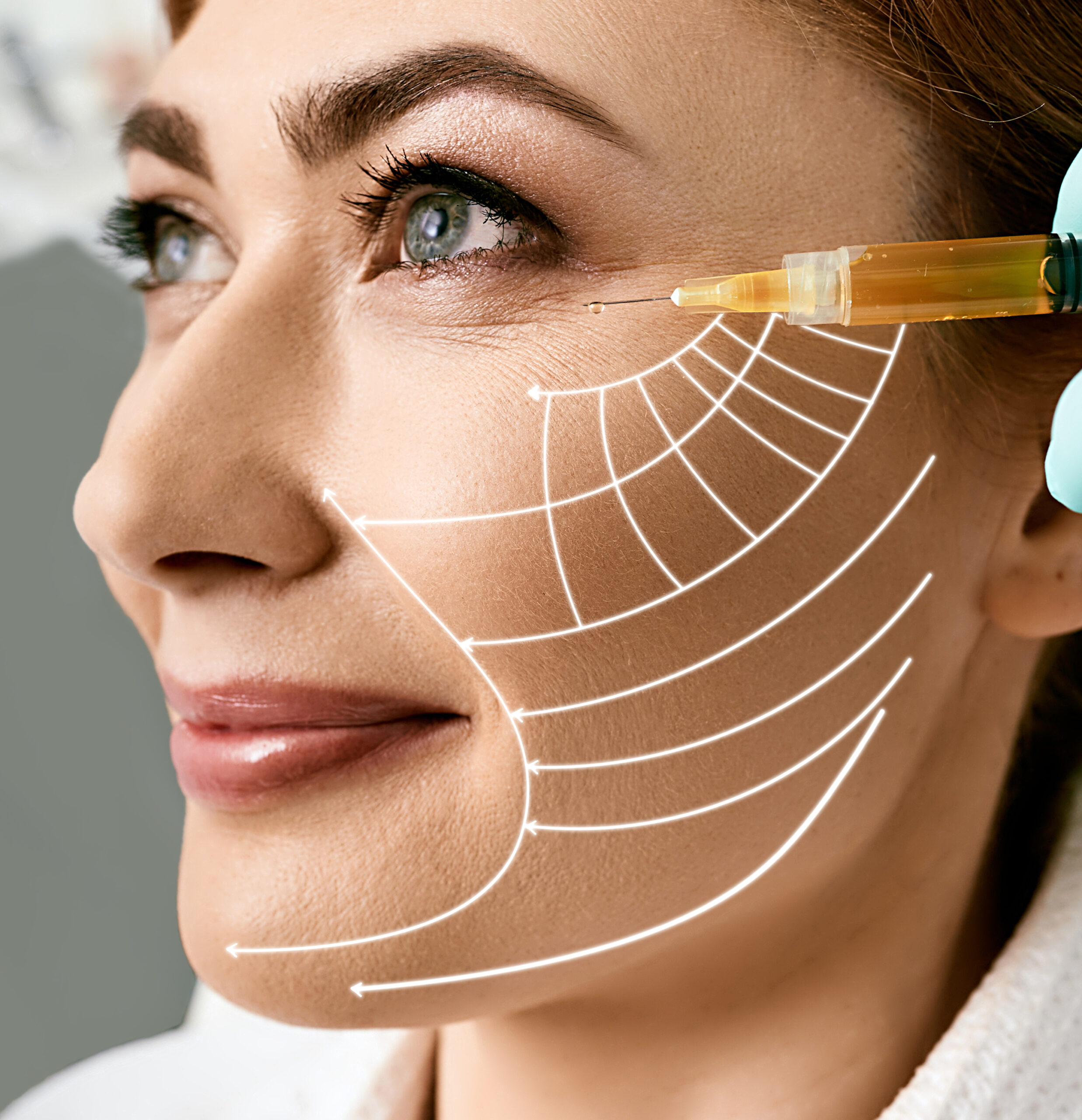
Why Does the Face Lose Volume With Age?
A youthful facial appearance depends not only on skin firmness. The proportions and volume of the soft tissues also play a significant role.
As we age, changes occur in the skin, subcutaneous tissue, facial fat compartments, muscles, and bone structure. One of the visible effects of these changes is a gradual loss of volume.
This may be particularly noticeable in areas such as:
- the cheeks,
- the temples,
- the under-eye area,
- the nasolabial folds,
- the area around the mouth,
- the midface.
As a result, the face may begin to look slimmer, more tired, or hollow. Changes in facial proportions can also make certain wrinkles and folds appear more prominent.
In such cases, tightening the skin alone may not address the main cause of the concern. If volume loss is the predominant issue, one option for restoring it is fat transfer using the patient’s own fat.

What Is Facial Lipofilling?
Lipofilling, also known as lipotransfer or fat grafting, involves harvesting fat tissue from one area of the body and transferring it to another.
The filling material is therefore not a synthetic product, but the patient’s own tissue.
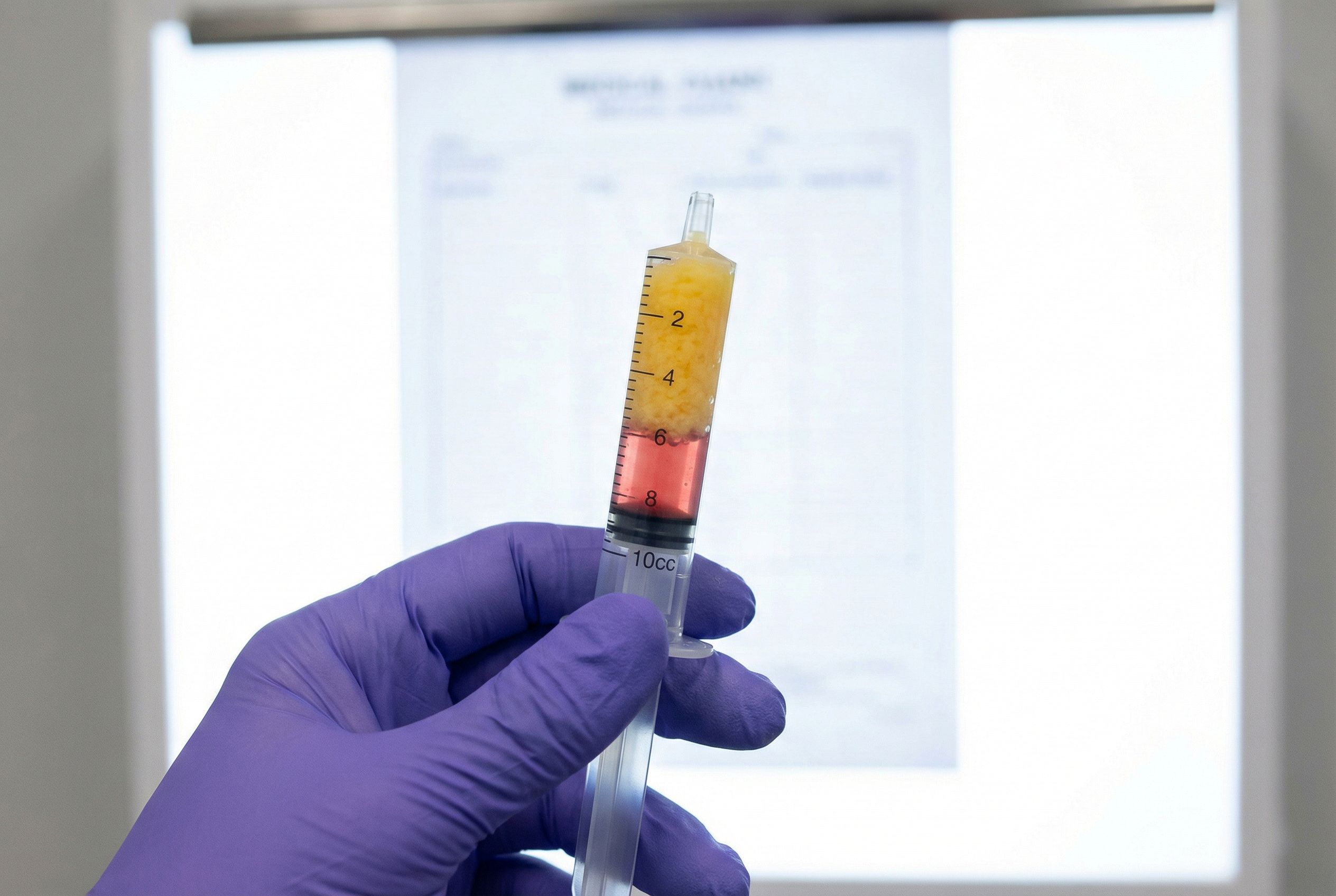
The procedure consists of several basic stages. First, an appropriate amount of fat tissue is harvested, for example from the abdomen, thighs, or other areas where sufficient fat is available. The harvested material is then prepared for transfer.
The purified fat tissue is precisely injected into selected areas of the face.
The aim should not be to create excessive volume, but to restore natural proportions.
Which Areas of the Face Can Be Rejuvenated With Your Own Fat?
The extent of the procedure is determined individually. Lipofilling can be used to correct a single area or may involve a larger part of the face.
Fat transfer can be used, among other purposes, to restore volume to the cheeks, temples, and selected areas around the eyes and mouth.
Appropriate distribution of the fat can also help soften the appearance of facial folds and improve the proportions of the midface.
However, the aim is not simply to mechanically “fill in wrinkles.” In a modern approach, the key is to identify where volume loss has actually occurred and which areas should be corrected to achieve a harmonious result.
Full-Face Lipofilling – Rejuvenation of the Entire Face
In some patients, volume loss is not limited to a single small area. Changes may simultaneously affect the cheeks, temples, areas around the eyes, facial folds, and other parts of the face.
In such cases, a more comprehensive full-face lipofilling procedure can be planned.
The doctor then assesses the face as a whole. Facial proportions, symmetry, and the natural distribution of tissues are key considerations.
The aim is not to change the patient’s facial features, but to restore some of the volume lost as a result of the ageing process.
Lipofilling vs. Surgical Facelift – What Is the Difference?
This is one of the most important considerations for people exploring facial rejuvenation options.
Lipofilling and a surgical facelift are not the same procedure and address different concerns.
Lipofilling primarily focuses on restoring lost volume. Fat is transferred to selected areas to restore fullness and improve facial proportions.
A surgical facelift, on the other hand, is primarily intended to reposition sagging tissues, improve the contour of the lower face, and reduce excess loose skin.
If a patient’s main concern is hollow cheeks and temples with relatively little skin laxity, lipofilling may address their needs without the need for a traditional facelift.
However, if there is significant excess skin, pronounced tissue sagging, and loss of jawline definition, fat transfer alone may not provide the desired result.
For this reason, lipofilling should not be regarded simply as a “facelift without surgery.”
Is Lipofilling Less Invasive Than a Facelift?
The extent of intervention involved in lipofilling differs from that of a traditional surgical facelift.
A surgical facelift requires carefully planned incisions, as well as the dissection and repositioning of tissues. Depending on the technique used, the procedure may also involve deeper structures of the face and neck and the removal of excess skin.
Lipofilling does not require such extensive facial incisions. Fat tissue is harvested from a donor area and then transferred into selected areas using appropriate instruments.
In this respect, the procedure may be less invasive than a traditional surgical facelift.
However, it is important to remember that lipofilling is still a medical procedure requiring appropriate patient assessment, anaesthesia, and a recovery period.
Lipofilling or Facelift – How Do You Choose the Right Procedure?
The choice of procedure should not be based on age alone.
The nature of the changes is much more important.
Lipofilling may be considered primarily when the main concerns include:
- loss of volume in the cheeks,
- hollowing of the temples,
- loss of tissue volume in the midface,
- loss of natural facial proportions,
- deepening of certain facial folds associated with soft tissue volume loss.
A facelift may be more appropriate in cases involving:
- significant tissue sagging,
- loss of a defined facial contour,
- pronounced jowls,
- significant skin laxity,
- excess skin on the face and neck.
There is also a third option: combining both techniques.
Can a Facelift Be Combined With Lipofilling?
Combining these procedures may be appropriate because a facelift and fat transfer address two different aspects of the ageing process.
A facelift can reposition sagging tissues and improve facial contours, while lipofilling can restore lost volume.
In appropriately selected cases, this makes it possible to address both tissue sagging and volume loss at the same time.
The extent of the procedure should always be determined during a consultation with the surgeon.

Hand Rejuvenation With Your Own Fat
The ageing process is particularly noticeable not only on the face but also on the hands.
Over time, the subcutaneous tissue on the back of the hands may become thinner. The skin may appear more delicate, while the underlying structures become increasingly visible.
This primarily applies to veins and tendons.
Even someone with a relatively youthful-looking face may therefore notice considerably more advanced signs of ageing on their hands.
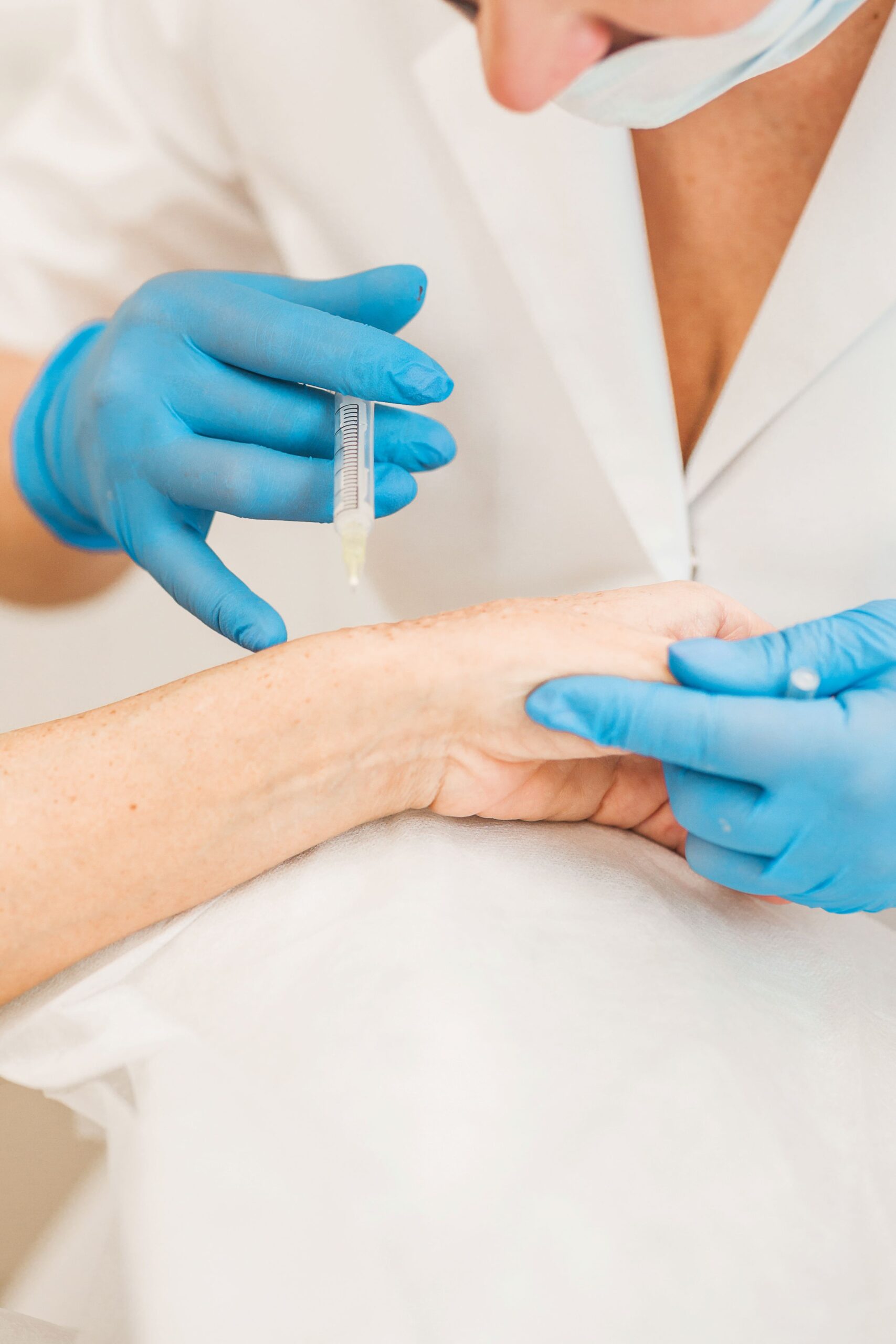
Hand lipofilling aims to restore some of the lost volume by transferring the patient’s own fat tissue.
What Are the Benefits of Hand Lipofilling?
Injecting fat tissue beneath the skin on the back of the hands can primarily help restore lost volume.
As a result, deeper structures may become less visible, giving the hands a fuller and more youthful appearance.
The procedure may be considered, among others, for people with:
- significant loss of volume in the hands,
- very prominent veins,
- clearly visible tendons,
- hollow areas between the bony structures,
- thin, lax skin,
- a noticeable contrast between a rejuvenated facial appearance and the appearance of the hands.
Lipofilling does not, however, address all signs of ageing on the hands. For example, sun-induced pigmentation may require other treatment methods.
Why Is Your Own Fat Used for Lipofilling?
The key feature of this method is the use of autologous material, meaning tissue obtained from the patient’s own body.
No foreign filler is therefore introduced.
After the fat has been properly harvested and prepared, some of the transplanted fat cells may successfully integrate into their new location.
However, it is important to remember that not all of the transferred fat will remain in the treated area. Some of it may be naturally absorbed by the body during the postoperative period.
For this reason, the final result of the procedure can only be assessed after an appropriate period of time.
Are the Results of Lipofilling Permanent?
Transplanted fat tissue that successfully integrates with the surrounding tissues can provide long-lasting results.
This does not, however, stop the ageing process.
The face and hands will continue to change with age. Significant fluctuations in body weight may also have an impact, as the transplanted cells remain fat tissue and can respond to changes occurring in the body.
Maintaining a stable body weight is therefore one of the factors that can help preserve predictable proportions.
Does All of the Transferred Fat Survive?
No.
Some of the transplanted tissue may be absorbed by the body. The amount of volume retained can vary between patients and depends on factors including the technique used, the treatment area, and individual characteristics.
For this reason, the appearance immediately after the procedure does not represent the final result.
Swelling is also present initially and gradually subsides.
How Is Facial and Hand Lipofilling Performed?
The first stage is a consultation and assessment for the procedure.
The doctor identifies the areas that require additional volume and selects a donor site from which an appropriate amount of fat tissue can be harvested.
The fat is then harvested and prepared for transfer.
The final stage involves precisely injecting the prepared fat into the areas of the face or hands requiring correction.
The technique used and the amount of tissue transferred are tailored to each patient individually.
When treating the face, maintaining natural proportions is particularly important. More volume does not automatically mean a better result.
What Is the Recovery Period Like?
After lipofilling, temporary changes can be expected both at the fat harvesting site and in the area where the fat has been transferred.
These may include:
- swelling,
- bruising,
- tenderness,
- a feeling of tightness,
- temporary unevenness caused by swelling.
The severity and duration of these symptoms may vary from patient to patient.
During recovery, patients should follow their doctor’s recommendations and attend scheduled follow-up appointments.
Does Lipofilling Provide Natural-Looking Results?
One of the main advantages of a properly planned fat transfer procedure is the ability to restore volume using the patient’s own tissue.
However, appropriate patient selection and the way the fat is distributed are essential.
The aim should not be to create excessive facial volume. A well-planned procedure is intended to restore proportions and volume in areas where they have been lost.
The patient should still look like themselves – simply with a more rested and harmonious appearance.

Facial and Hand Lipofilling in Warsaw
Lipofilling may be an option for people who have noticed a loss of volume in the face or hands and would prefer a procedure that uses their own tissue.
Wilmed Medical Centre in Warsaw offers facial lipofilling, comprehensive full-face lipofilling, and hand lipofilling procedures.
Before undergoing the procedure, an individual assessment is necessary. During the consultation, a plastic surgeon can determine whether the main concern is volume loss, skin laxity and tissue sagging, or a combination of several age-related changes.
This is particularly important for people considering whether lipofilling or a surgical facelift would be more appropriate for their needs.
Natural Rejuvenation Should Begin With an Accurate Assessment of the Problem
Not every ageing face requires a facelift, and not every face can be effectively rejuvenated by restoring volume alone.
If the main concern is hollow cheeks, temples, or volume loss in other areas, lipofilling may allow the patient’s own tissue to be used to subtly restore natural facial proportions. In the hands, fat transfer may help reduce the visibility of underlying structures that become more prominent with age.
When tissue sagging is more pronounced, a surgical facelift may be an appropriate option, while in some patients, combining different techniques may provide the desired result.
For this reason, decisions regarding the extent of rejuvenation should begin with a consultation with a plastic surgeon, who will assess not only the patient’s age but, more importantly, the type of changes present and their underlying causes.
FAQ – Frequently Asked Questions About Facial and Hand Lipofilling
What Is Lipofilling?
Lipofilling is a procedure that involves harvesting fat tissue from one area of the body, preparing it appropriately, and transferring it to another area. In aesthetic surgery, it can be used, among other purposes, to restore volume to the face and hands.
Is Facial Lipofilling a Facelift?
No. Lipofilling primarily restores lost volume. A surgical facelift, on the other hand, involves repositioning sagging tissues and may also include the removal of excess skin.
Can Lipofilling Replace a Facelift?
In some patients whose main concern is volume loss with only minimal tissue sagging, a traditional facelift may not be necessary. However, in cases of significant skin laxity and excess skin, lipofilling alone cannot provide the same effect as facelift surgery.
Is Lipofilling Less Invasive Than a Facelift?
The extent of intervention is smaller than with traditional facelift surgery because lipofilling does not require such extensive facial incisions or tissue repositioning. However, lipofilling is still a medical procedure that requires appropriate preparation and a recovery period.
Where Is the Fat for Lipofilling Harvested From?
The donor site is selected by the doctor based on the patient’s body shape and the extent of the planned procedure. Fat tissue may be harvested from areas such as the abdomen, thighs, or other parts of the body where a sufficient amount of fat is available.
Can Your Own Fat Be Used to Restore Volume to the Cheeks?
Yes. The cheeks are among the areas where volume loss can be corrected using fat transfer. The surgeon determines the extent of the procedure and the amount of fat to be transferred.
Can Hollow Temples Be Filled With Fat?
Lipofilling can also be used to restore volume to hollow temples. Suitability for the procedure depends on the patient’s anatomy and the nature of the changes present.
Can Fat Be Transferred Under the Eyes?
Fat tissue can be used in selected areas around the eyes. However, this region requires particularly precise planning and appropriate surgical experience. The surgeon determines whether the procedure is suitable following an examination.
How Long Do the Results of Facial Lipofilling Last?
Some of the transferred fat tissue is absorbed by the body, while fat that successfully integrates with the surrounding tissues may remain for a long time. However, the face continues to undergo natural ageing processes and changes associated with factors such as fluctuations in body weight.
Does Lipofilling Need to Be Repeated?
Not every patient requires an additional procedure. In some cases, after assessing how much of the transferred fat has been retained, the doctor may recommend an additional correction.
How Does Fat Transfer Rejuvenate the Hands?
Fat tissue is transferred to the back of the hands to restore lost volume. This may help reduce the visibility of deeper structures, such as veins and tendons.
Does Lipofilling Remove Pigmentation From the Hands?
This is not the primary purpose of the procedure. Lipofilling is mainly used to correct volume loss. Pigmentation and other superficial skin changes may require different treatment methods.
Can Facial and Hand Lipofilling Be Performed at the Same Time?
The extent of the procedure is determined by the surgeon based on the patient’s health, the amount of available fat tissue, and the desired result. In selected cases, treatment involving more than one area may be planned.
Lipofilling or Hyaluronic Acid – Which Should You Choose?
Both methods can be used to restore or increase volume, but they differ significantly in terms of the technique, the material used, and the nature of the procedure. Lipofilling uses the patient’s own fat tissue. The choice of method should depend on the treatment area, the extent of volume loss, and the desired result.
What Type of Doctor Should You See for Lipofilling?
Fat transfer procedures involving the face and hands require detailed knowledge of anatomy, appropriate patient assessment, and procedural experience. If you are considering lipofilling, it is advisable to consult a plastic surgery specialist.
Wyróżnienie dla Najlepszej Placówki 2019
Wyróżnienie przyznane przez pacjentów, którzy skorzystali z naszych usług za pośrednictwem platformy tourmedica.pl
Kontakt
Skontaktuj się z nami
Zadzwoń do nas
Adres
ul. Wiktorii Wiedeńskiej 9a lok.U2
02-954 Warszawa - Wilanów
Inspektor danych osobowych
Katarzyna Mączyńska - MBRK
[email protected]
Godziny otwarcia
Od poniedziałku do piątku
w godzinach od 08:00 do 20:00