


Strona główna / Knowledge Base /
Eye rejuvenation, or eyelid correction
Blepharoplasty is a procedure within the field of aesthetic surgery. Its purpose is to rejuvenate the appearance of the eyes. In many cases, it is also performed for health reasons. Eyes, like lips, are an important aesthetic element of the face. Eyelids are the part of the eyes that determine their attractiveness and youthful appearance. At the Wilmed clinic, our experienced specialists perform blepharoplasty procedures to help your eyes and face regain a youthful, natural look. According to patient feedback, blepharoplasty can take 10 years off your appearance!
Relentless time – why do eyelids droop?
Drooping eyelids, expression wrinkles, drooping corners of the mouth, and jowls add years, and despite many efforts, the face can appear sad and tired.
The cause is time and the effects of adverse factors related to the overall aging of the skin around the eyes. The skin here is thinner and more delicate than in other parts of the face. Blood circulation around the eyes is weaker, and there are few sebaceous glands. This leads to frequent dryness of the skin around the eyes.
It is important to remember that this part of the body is most exposed to the passage of time due to muscles. The most active muscles in the human body are located here. Through blinking, expressing emotions, squinting with untreated myopia, the eyes respond most strongly to external stimuli. The aging of the skin around the eyes can be influenced by our genes and skin type, as well as external factors such as UV radiation, addictions, unhealthy diet, or lack of proper skin care.
Observing the skin structure on the eyelids in the mirror, we see that it is delicate yet responsible for protecting the eye and keeping it open for several hours a day. Under the eyelid skin, there is fat and muscle. With age, we lose this fat, the eyelid becomes lax, and over time it begins to droop. The muscles become weaker and it becomes increasingly difficult for them to maintain the eyelid skin in good condition. Additionally, collagen and elastin, substances responsible for skin density, decrease in the eyelid skin. Stress, lack of proper skin care, and some eye diseases also contribute. And here lies the problem – drooping eyelids!
The problem of drooping eyelids is most commonly observed after the age of 40, when it becomes most visible and ages the face.
It also happens that drooping eyelid corners limit the field of vision and hinder normal functioning. Such a situation is an indication for blepharoplasty not only for aesthetic reasons but primarily for health and functional reasons.
Drooping eyelids, which give the face an older appearance, can cause psychological discomfort and affect our mood. To avoid this, it is worth taking action and solving the problem.
Only with trusted specialists
Solving the problem of drooping eyelids is theoretically simple but requires great delicacy and experience. The eyes are a very sensitive organ that must be cared for. An improperly performed procedure, whether on the upper or lower eyelid, can cause not only pain but also worsen the appearance. Therefore, when deciding on an aesthetic medicine procedure around the eyes, it is necessary to consult a specialist surgeon who specializes in blepharoplasty. They will advise on the type of procedure and indicate the most appropriate actions to meet our expectations.
Blepharoplasty procedure
Blepharoplasty is a surgical procedure decided upon by an aesthetic medicine surgeon. During the consultation, the scope of the procedure is determined, and together with the patient, the goal to be achieved is set.
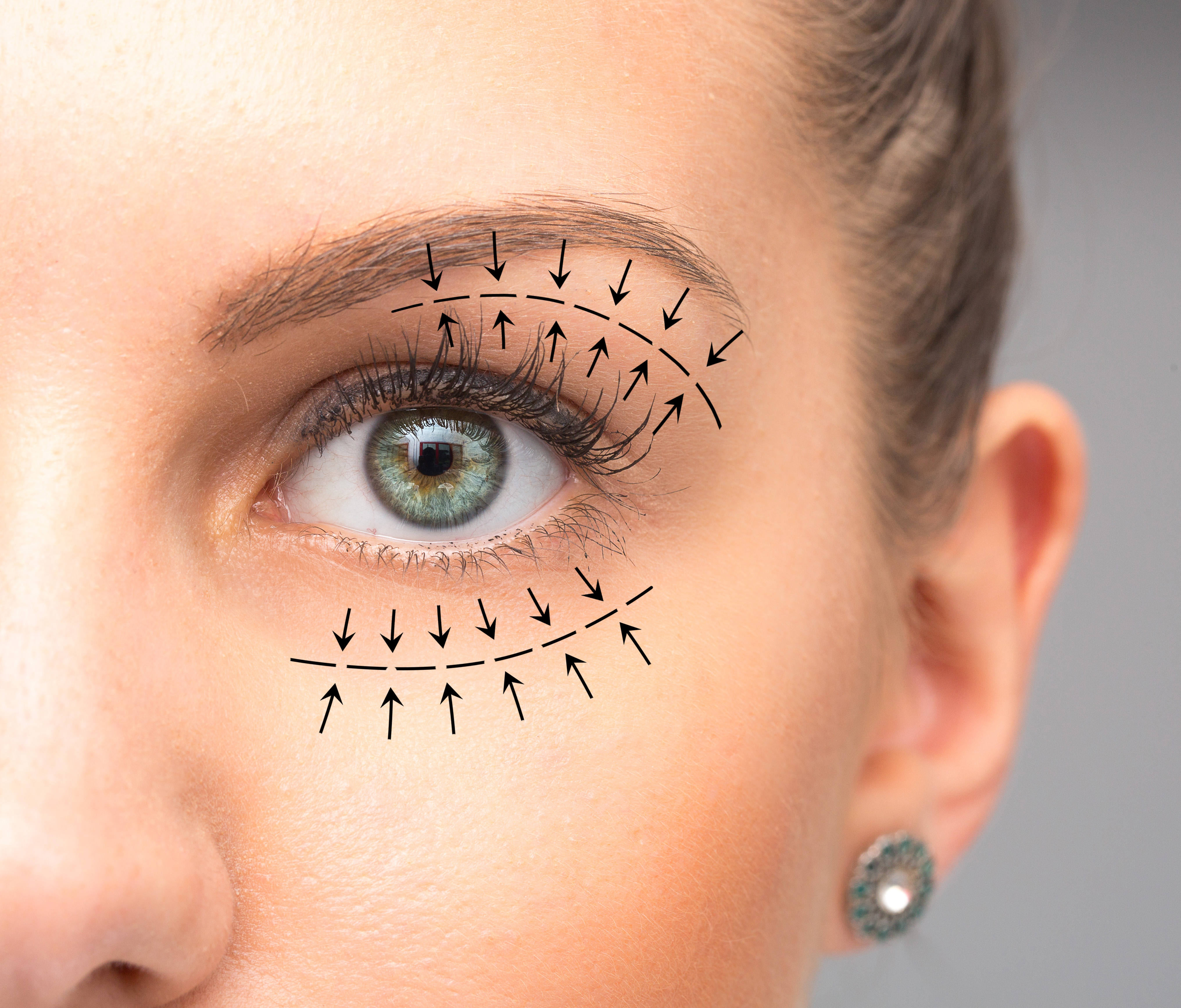
The eyelid correction procedure is performed under local anesthesia or intravenous sedation and lasts about 1 hour. The surgeon makes an incision in the natural fold of the eyelid, removes the excess skin, removes fat hernias, and sutures the wound. After 7-10 days, the patient returns for suture removal.
The upper eyelid procedure involves removing a narrow strip of skin 5–10 mm wide. The lower incision is made about 2–5 mm from the eyelid edge. The scar is hidden in the natural skin fold. Additionally, correction of the lower eyelid also involves removing a narrow strip of skin. Shortening of the lower eyelid edge muscle, called canthopexy, is performed. This action prevents lowering of the eyelid edge, which may occur as a reaction to skin removal.
Lowering of the eyelid edge is an aesthetic complication that can cause an unnatural eye appearance and sometimes lead to eversion of the lower eyelid and exposure of the conjunctiva. For both upper and lower eyelids, small portions of subcutaneous fat (pea-sized) are usually also removed.
In some cases, lower eyelid correction can be performed without cutting the skin. The incision is then made through the conjunctiva, and the procedure aims only to remove a small amount of fat.
After the procedure, bruising or swelling may occur, but these discomforts subside quickly. The scar is located in the natural eyelid fold and after recovery is almost invisible. After surgery, it is recommended to apply cooling compresses to the operated area.
Dry eye syndrome may occur after the procedure, which should be consulted with an ophthalmologist and treated with appropriate eye hydration.
Results after blepharoplasty
Blepharoplasty is a surgical procedure and requires recovery. After the procedure, the doctor provides the patient with further recommendations. After the wounds heal, the patient can enjoy a radiant appearance.
Blepharoplasty achieves very good visual effects: facial rejuvenation, improved skin tension around the eyes. The eyes become more expressive and have a younger, natural look. All this also positively affects our well-being.
If you are considering eyelid correction, we invite you to consultations with our specialist doctors. Appointments are available Monday to Friday from 8:00 AM to 8:00 PM by phone (0 22 651 98 61 and 692 407 540) or by email at [email protected].
We look forward to seeing you!
Wyróżnienie dla Najlepszej Placówki 2019
Wyróżnienie przyznane przez pacjentów, którzy skorzystali z naszych usług za pośrednictwem platformy tourmedica.pl
Kontakt
Skontaktuj się z nami
Zadzwoń do nas
Adres
ul. Wiktorii Wiedeńskiej 9a lok.U2
02-954 Warszawa - Wilanów
Inspektor danych osobowych
Katarzyna Mączyńska - MBRK
[email protected]
Godziny otwarcia
Od poniedziałku do piątku
w godzinach od 08:00 do 20:00