



Strona główna / Knowledge Base /
Nipple and Areola Correction – Which Procedure?
Nipple and Areola Correction – When Is a Minor Procedure Sufficient, and When Is Breast Surgery Needed?
The appearance of the breasts is determined not only by their size. Proportions, symmetry, and the appearance of the nipple-areola complex are also very important.
Areolas that are too large or stretched, a noticeable difference between the right and left breast, an abnormal nipple position, or inverted nipples can cause discomfort even when the patient is satisfied with the size and overall shape of her breasts.
In such cases, extensive breast surgery is not always necessary. Sometimes, a relatively minor areola or nipple correction may be sufficient.
In other cases, changes in the appearance of the areola may be one of the signs of significant breast sagging. In such situations, combining areola correction with a breast lift or breast reduction may be more appropriate.
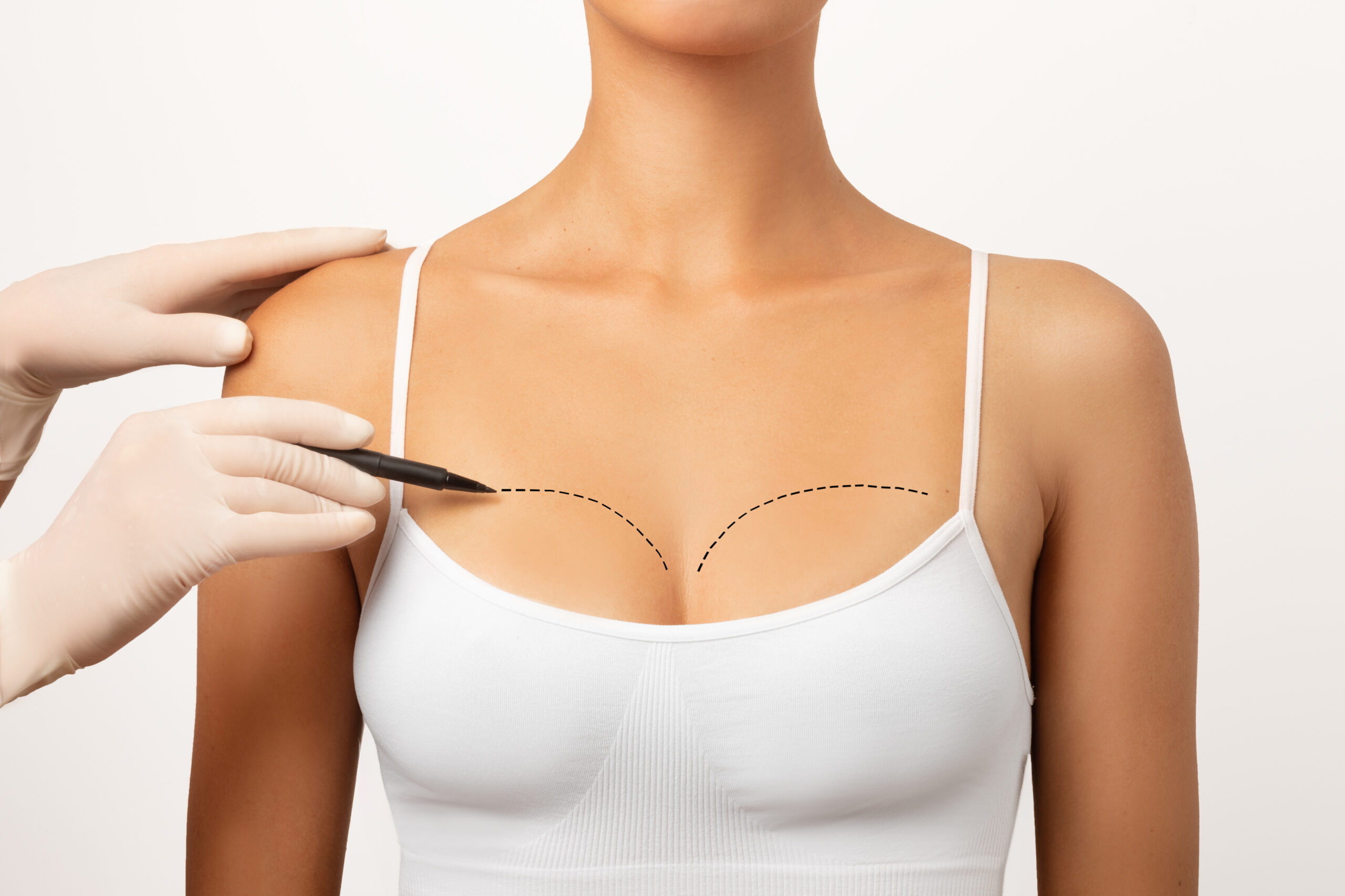
Why Can the Appearance of the Nipples and Areolas Change?
The size and shape of the areolas vary considerably from person to person.
There is no single diameter or appearance that can be considered normal for all women.
However, the areolas can change throughout life.
Factors that may influence their appearance include:
- pregnancy,
- breastfeeding,
- hormonal changes,
- significant fluctuations in body weight,
- stretching of the skin,
- ageing of the tissues,
- natural breast asymmetry.
In some women, large areolas are present from puberty. In others, enlargement only becomes noticeable after pregnancy, breastfeeding, or a significant increase in breast volume.
The nipples can also vary in size, length, and degree of projection.
When Are Areolas Considered Too Large?
There is no universal threshold at which an areola becomes “too large”.
Its proportions in relation to the entire breast are much more important.
The same diameter may look harmonious on a larger breast but appear disproportionate on a smaller breast.
During the consultation, the surgeon therefore assesses not only the areola itself, but also:
- breast size,
- breast shape,
- skin quality,
- nipple position,
- the degree of breast sagging,
- symmetry between the two breasts.
Only on this basis can an appropriate correction method be planned.
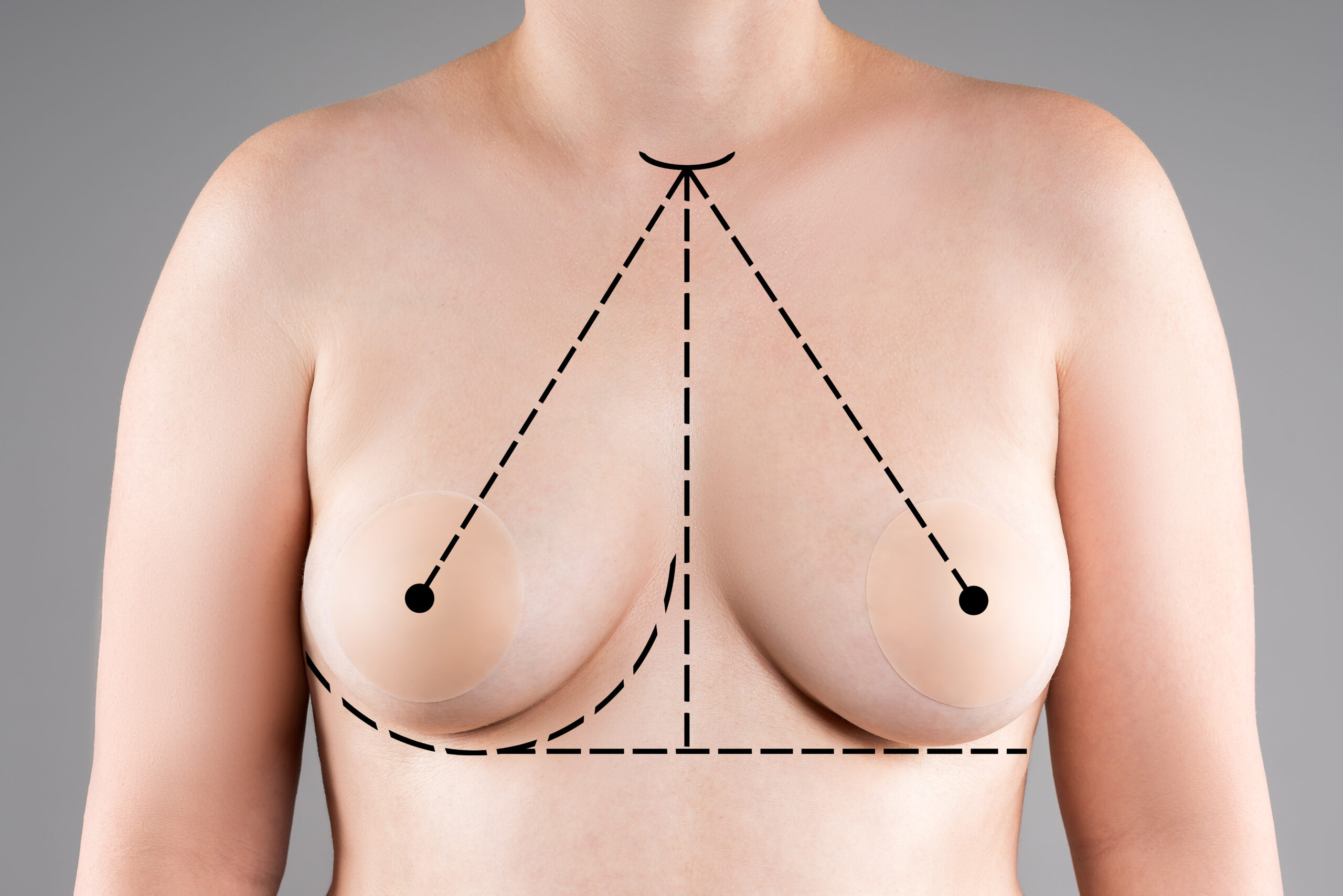
What Does Areola Reduction Involve?
Areola correction may involve surgically reducing the diameter of the areolas.
A carefully planned section of tissue is removed from an excessively wide areola, after which the edges are precisely sutured together.
The incision is usually made along the border between the areola and the surrounding skin, allowing the resulting scar to be positioned appropriately.
The aim of the procedure is to achieve a more proportionate areola diameter and improve symmetry.
The goal should not always be to make the areola as small as possible. The most important consideration is to ensure that its size is proportionate to the shape and size of the breast.
Can Areola Correction Alone Improve the Appearance of the Entire Breast?
Yes, if the primary concern is indeed the size or asymmetry of the areolas.
A relatively minor change to the central part of the breast can noticeably improve its overall proportions.
However, this does not mean that areola correction can replace a breast lift in cases of significant sagging.
If the breast is significantly sagging and there is considerable excess skin, limiting the procedure to areola reduction alone may not provide the desired result.
In such cases, more extensive breast surgery may be necessary.

Areola Correction During a Breast Lift
During mastopexy, or surgical breast lift, the position of the breasts and the nipple-areola complex is adjusted.
If the areola has previously become stretched, the surgeon can also reduce its diameter during the same operation.
This makes it possible to simultaneously improve:
- the position of the breasts,
- breast shape,
- nipple position,
- areola size,
- the proportions of both breasts.
This approach is often considered for women following pregnancy, breastfeeding, or significant weight loss, when the overall shape of the breasts has changed.
Areola Correction During Breast Reduction
Large, heavy breasts are very often accompanied by wide, stretched areolas.
During reduction mammoplasty, excess breast tissue and skin are removed, and the remaining tissues are appropriately reshaped.
The nipple-areola complex can be repositioned higher on the breast, while the areola itself can be reduced in size.
As a result, breast reduction is not simply about “reducing volume” but is intended to give the entire breast a more proportionate shape.
Areola Asymmetry – Can It Be Corrected?
The right and left breasts are almost never identical. This also applies to the nipples and areolas.
Minor differences are entirely natural.
Correction may be considered when the asymmetry is significant – for example, when one areola is noticeably larger, positioned considerably higher or lower, or has a different shape.
The procedure may involve one or both breasts.
However, it is important to have realistic expectations regarding the outcome. Surgery can significantly improve symmetry, but achieving two completely identical breasts is not always possible.

What Are Inverted Nipples?
A typical nipple projects to a greater or lesser degree above the surface of the areola.
In some people, however, one or both nipples remain pulled inward.
Nipple inversion may have been present for many years and may be related to the individual anatomy of the breast.
However, it is important to distinguish this from new or suddenly developing nipple inversion.
A new change, particularly if it affects only one breast, requires medical assessment because it may be a sign of an underlying breast condition. In such cases, an aesthetic procedure should not be the first step.
The underlying cause must be investigated first.

What Does Inverted Nipple Surgery Involve?
The method of correction depends on the degree of inversion and the individual patient’s anatomy.
The aim of the procedure is to release the structures causing the inversion and stabilise the nipple in a more natural position.
Various surgical techniques are available.
With some techniques, it may be possible to preserve the milk ducts, while more advanced deformities may require a more extensive procedure.
This is particularly important for women who plan to breastfeed in the future.
For this reason, patients should inform their surgeon about any plans for future pregnancy and breastfeeding before undergoing the procedure.
Can Nipples That Are Too Large Also Be Reduced?
Yes. The concern may involve not only the areola but also the nipple itself.
In some patients, the nipples may be very long, wide, or asymmetrical.
This may be a congenital feature or a change associated with factors such as pregnancy and breastfeeding.
In selected cases, surgical reduction of the nipple’s height, width, or both dimensions may be possible.
The technique should be tailored individually, as it is important to consider not only the aesthetic result but also sensation and function in this area.
Can Nipple Correction Affect the Ability to Breastfeed?
It can.
This depends on the type of deformity and the surgical technique used.
With some techniques, it may be possible to preserve the milk ducts, while in more advanced cases, cutting them may be necessary.
More extensive breast procedures, such as breast reduction or breast lift, may also affect the ability to breastfeed to varying degrees.
Women planning a future pregnancy should therefore discuss this issue with their surgeon during the consultation.
Does an Inverted Nipple Always Require Surgery?
No.
If nipple inversion is a long-standing anatomical feature and does not cause any problems, there is no need to correct it.
The procedure may be performed if the patient is concerned about the appearance of the nipple or if there are other indications for treatment.
A nipple that previously appeared normal and has suddenly become inverted should be treated differently.
Such a change should be medically assessed and investigated.
Scars After Areola and Nipple Correction
Any surgical incision will result in a scar.
In areola correction, the incision can usually be planned along the border between the darker areola and the lighter surrounding skin.
Immediately after the procedure, the scar will be more visible. Over time, it remodels and usually becomes less noticeable.
The final appearance depends on factors including:
- the extent of the procedure,
- the suturing technique,
- the healing process,
- individual predisposition to scarring,
- scar care.
Patients with a tendency to develop hypertrophic scars or keloids should inform their doctor before undergoing the procedure.
Can Nipple or Areola Correction Be Combined With Breast Augmentation?
Yes.
If, in addition to concerns about the appearance of the nipples or areolas, the patient is also concerned about insufficient breast volume, a more extensive procedure that includes breast augmentation may be planned in selected cases.
Similarly, correction of the nipple-areola complex may form part of:
- a breast lift,
- breast reduction,
- breast asymmetry correction,
- breast augmentation combined with a lift.
However, this does not mean that procedures should always be combined.
If the concern is limited to a small area of the breast, a less extensive procedure may be sufficient.
How Does the Surgeon Determine the Extent of Surgery?
The most important step is to assess the entire breast rather than focusing only on the area the patient perceives as a concern.
For example, a large areola may simply be an individual anatomical feature.
However, it may also result from significant stretching of the skin and sagging of the entire breast.
In the first situation, isolated areola reduction may be sufficient. In the second, a breast lift combined with correction of the nipple-areola complex may be more appropriate.
During the consultation, the surgeon assesses factors including:
- breast position,
- nipple position,
- areola size,
- symmetry,
- skin elasticity,
- breast volume,
- the patient’s expectations.
Only after considering all of these factors can an appropriate procedure be planned.

Areola and Nipple Correction at Wilmed in Warsaw
Wilmed offers procedures involving the nipple-areola complex, including areola correction and surgical treatment of inverted nipples.
These procedures can be performed as standalone treatments or as part of more extensive breast surgery.
If the concern is limited to the size or symmetry of the areolas, extensive surgery involving the entire breast is not always necessary.
However, if abnormal nipple position is accompanied by breast sagging, significant stretching of the skin, or excessive breast volume, the surgeon may consider a breast lift or reduction combined with areola correction.
Sometimes a Minor Correction Is Enough to Improve the Proportions of the Entire Breast
Not everyone who is dissatisfied with the appearance of their breasts requires breast augmentation, reduction, or a full breast lift.
The concern may involve a small but aesthetically significant area – the nipple and areola.
Appropriately planned correction can improve their size, shape, position, or symmetry. However, if the changes involve the entire breast, the procedure may be combined with a breast lift, reduction, or another procedure.
Whether a minor correction is sufficient or more extensive surgery is required can only be determined after assessing the anatomy of the breasts during a consultation.
FAQ – Nipple and Areola Correction
Can the Areolas Be Reduced Without Surgery on the Entire Breast?
Yes. If the size or asymmetry of the areolas is the main concern, isolated areola correction may be possible in appropriately selected patients.
Does Areola Reduction Lift the Breasts?
Areola correction can improve its proportions and, in certain cases, influence the overall appearance of the breast shape, but it does not replace a full mastopexy in cases of significant breast sagging.
Are the Areolas Reduced During a Breast Lift?
If the areolas are stretched or disproportionately large, reducing their size may be one of the elements of mastopexy.
Are the Nipples Corrected During Reduction of Large Breasts?
During breast reduction, the position of the entire nipple-areola complex is usually adjusted. If necessary, the size of the areola can also be corrected.
Can Inverted Nipples Be Surgically Corrected?
Yes. Surgical techniques are available for correcting inverted nipples. The choice of technique depends on the degree of inversion and the patient’s anatomy.
Is an Inverted Nipple Always an Aesthetic Concern?
No. Nipple inversion may be an anatomical feature that has been present for many years. However, new inversion affecting only one nipple requires medical assessment before any aesthetic correction is considered.
Can Inverted Nipple Surgery Affect Breastfeeding?
Some surgical techniques may affect the milk ducts. The potential risk should be discussed with the surgeon, particularly if the patient is planning a future pregnancy and breastfeeding.
Can an Overly Long Nipple Be Reduced?
In selected cases, the height or width of the nipple can be surgically reduced. The extent of the procedure is tailored individually.
Can Areola Asymmetry Be Corrected?
Yes. The surgeon can adjust their size or position. However, it is important to remember that the aim is to improve symmetry rather than necessarily achieve two completely identical sides.
Can Areola Correction Be Combined With Breast Implants?
In selected cases, yes. If the patient also requires an increase in breast volume, the procedures can be planned as part of a comprehensive surgical approach.
Will There Be a Scar After Areola Correction?
Yes. As with any surgical incision, a scar will remain. Its position is carefully planned, and its appearance changes over time as the scar matures.
When Can the Final Result Be Seen?
Swelling is present immediately after the procedure, and the tissues need time to heal and settle. The final result should therefore not be assessed during the first few days after surgery. The exact course of recovery depends on the extent of the procedure.
Wyróżnienie dla Najlepszej Placówki 2019
Wyróżnienie przyznane przez pacjentów, którzy skorzystali z naszych usług za pośrednictwem platformy tourmedica.pl
Kontakt
Skontaktuj się z nami
Zadzwoń do nas
Adres
ul. Wiktorii Wiedeńskiej 9a lok.U2
02-954 Warszawa - Wilanów
Inspektor danych osobowych
Katarzyna Mączyńska - MBRK
[email protected]
Godziny otwarcia
Od poniedziałku do piątku
w godzinach od 08:00 do 20:00