


Strona główna / Knowledge Base /
Breast Augmentation, Lift or Reduction
Breast Augmentation, Lift or Reduction – How to Choose the Right Procedure?
Breast plastic surgery is not limited to increasing breast size. Patients seeking a consultation may have very different needs: one may want to add volume to smaller breasts, another may wish to restore their shape after pregnancy and breastfeeding, while another may want to reduce large, heavy breasts that cause back pain and interfere with everyday activities.
For this reason, the term breast surgery covers a range of procedures that differ in their indications, extent, and potential outcomes.
The most commonly performed procedures include breast augmentation with implants, breast lift (mastopexy), and breast reduction. In selected cases, procedures can also be combined, for example by performing a breast lift and augmentation at the same time.
How can you determine which procedure is the right choice?

Why Does the Appearance of the Breasts Change Over Time?
The breasts continue to change throughout virtually the entire course of a woman’s life. Their size, shape, and position are influenced by factors including:
- genetics,
- age,
- pregnancy,
- breastfeeding,
- hormonal changes,
- significant fluctuations in body weight,
- skin elasticity,
- the natural effects of gravity.
For one patient, the main concern may be insufficient breast volume; for another, sagging breasts; and for another, excessively large breasts.
A combination of several concerns is also very common. For example, after pregnancy, the breasts may simultaneously lose volume in the upper part and become noticeably saggy.
For this reason, the choice of procedure should be based on an assessment of breast anatomy, skin quality, the position of the nipples and areolas, the degree of sagging, and the patient’s expectations.

Breast Augmentation With Implants – When Is Increasing Volume the Main Goal?
Breast augmentation with implants is a procedure primarily intended to increase breast volume and enhance breast shape.
It may be considered by women with naturally small breasts, as well as by patients who have lost some breast volume following pregnancy, breastfeeding, or significant weight loss.
An implant may also help correct certain types of breast asymmetry.
However, correctly identifying the primary concern is essential.
If the breast has insufficient volume but is not significantly sagging, augmentation alone may provide the desired result.
If, however, the skin is significantly stretched and the nipple is positioned noticeably lower than it should be, inserting an implant may not correct the sagging. In such cases, the surgeon may recommend combining breast augmentation with a breast lift.
How Are Breast Implants Selected?
There is no single ideal breast implant suitable for every patient.
When planning the procedure, the surgeon takes into account factors including:
- chest width,
- the initial size of the breasts,
- the amount of the patient’s own breast tissue,
- skin quality and elasticity,
- breast symmetry,
- the desired volume,
- overall body proportions.
Implant size should not be selected solely on the basis of volume in millilitres. The same implant can look completely different in two women with different body types.
The shape and profile of the implant, as well as the way it is positioned, are also important.
The aim of appropriate surgical planning is to achieve a result that suits the patient’s anatomy rather than applying the same solution to everyone.
Can an Implant Lift Sagging Breasts?
This is one of the most frequently asked questions.
An implant primarily increases breast volume and can improve fullness. However, it is not a complete substitute for mastopexy.
In cases of very mild sagging, increasing breast volume may visually improve the shape of the breasts. In more advanced cases of ptosis, or breast sagging, it may be necessary to remove excess skin and reposition the nipple-areola complex to a higher position.
This is the purpose of a breast lift.

What Does a Breast Lift Involve?
A breast lift, also known as mastopexy, is a surgical procedure intended primarily for patients whose breasts have lost their previous position and firmness.
During the procedure, the surgeon removes a carefully planned amount of excess skin and reshapes the breast tissue to give the breasts a higher position and a more harmonious shape.
The position of the nipple and areola can also be adjusted during the procedure.
Mastopexy may be particularly considered after:
- pregnancy and breastfeeding,
- significant weight loss,
- substantial fluctuations in body weight,
- age-related loss of skin elasticity.
A breast lift does not necessarily involve a significant increase in breast size.
Breast Lift Without Implants
If a patient is satisfied with the volume of her breasts but is primarily concerned about sagging, a breast lift can be performed without implants.
In this case, the patient’s own breast tissue is used.
The aim is to improve the position and shape of the breasts rather than increase their size.
This is an important distinction because some women who seek treatment for what they perceive as “small breasts” actually have sufficient breast volume, but its distribution and position create the impression of reduced fullness.
A final assessment requires an examination by a surgeon.
Breast Augmentation Combined With a Breast Lift
For some patients, combining the two procedures may be the most appropriate option.
Breast augmentation combined with a breast lift can simultaneously:
- increase breast volume,
- improve fullness in the upper part of the breasts,
- remove excess stretched skin,
- reposition the breasts,
- appropriately reposition the nipple and areola.
This approach may be considered, among others, for women following pregnancy and breastfeeding when both loss of breast tissue and noticeable sagging have occurred.
However, the procedure is more complex than breast augmentation with implants alone, making appropriate patient assessment and surgical planning particularly important.
What Is the Difference Between Breast Reduction and a Breast Lift?
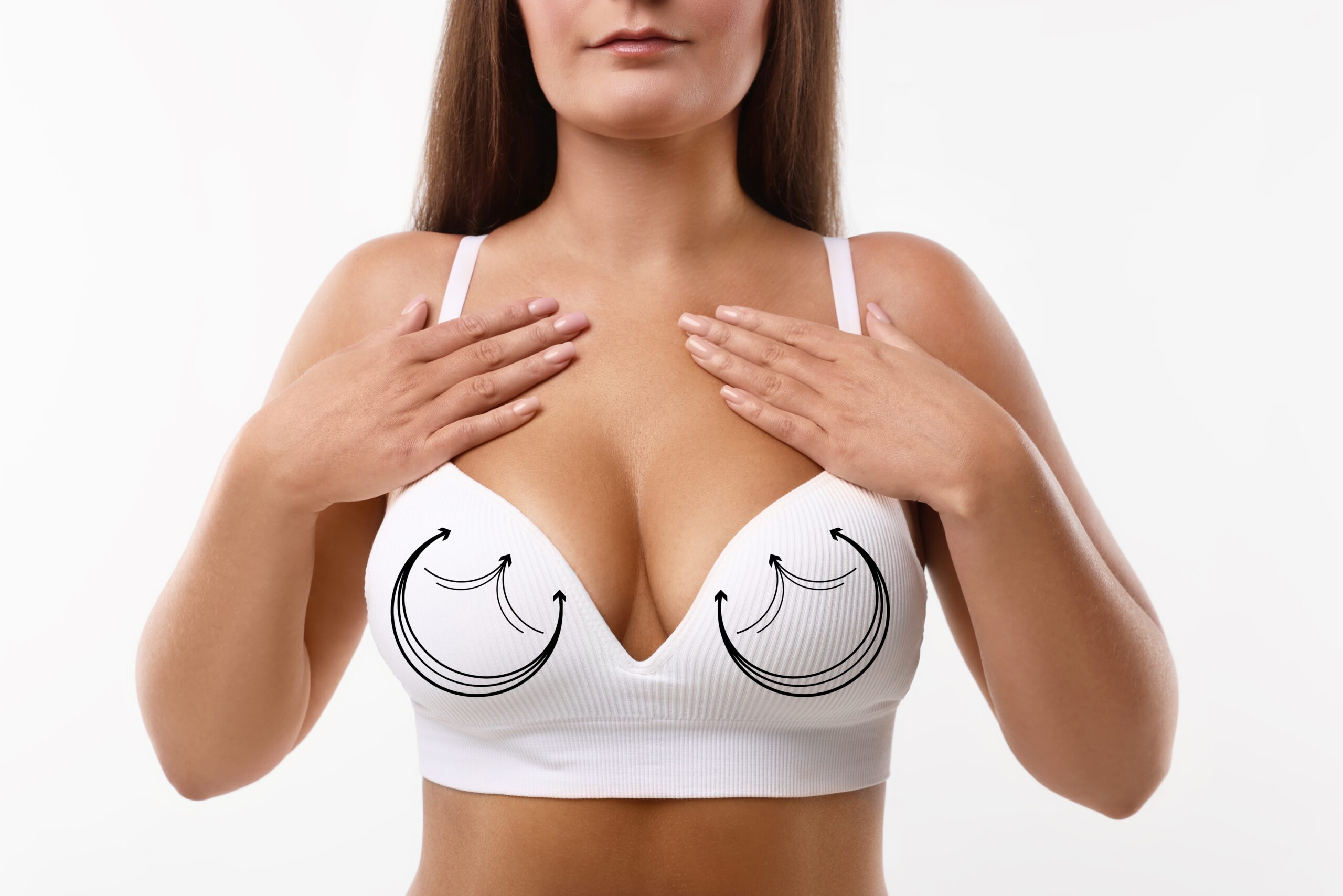
With a breast lift, the primary goal is to improve the position and shape of the breasts.
In breast reduction surgery, an additional key element is reducing breast volume by removing an appropriate amount of tissue.
Breast reduction, also known as reduction mammoplasty, is therefore intended primarily for women with large, heavy breasts.
The procedure usually also involves reshaping and lifting the breasts, as well as appropriately repositioning the nipple-areola complex.
It can therefore be said that breast reduction very often includes a lifting component, while a breast lift does not necessarily involve breast reduction.
When Do Large Breasts Become a Health Concern?
In the case of very large breasts, the concern may not be purely aesthetic.
Excessive breast weight may be associated with:
- neck pain,
- back pain,
- shoulder discomfort,
- chafing and skin irritation beneath the breasts,
- indentations caused by bra straps,
- limitations in physical and sporting activities,
- difficulty finding well-fitting clothing and underwear.
For this reason, breast reduction may be performed for both aesthetic and functional reasons.
A well-planned procedure aims to reduce breast volume while creating a proportionate breast shape.
Can the Areolas Be Reduced During Breast Reduction?
Yes. In women with large, sagging breasts, the areolas are often stretched as well.
During breast reduction surgery, the surgeon can reduce their diameter and reposition the nipple-areola complex to a new location.
The extent of the correction is tailored individually.
Areola correction can also be performed as a separate, considerably smaller procedure in patients who do not require reduction of the entire breast.
What About Breast Asymmetry?
Perfect breast symmetry is virtually nonexistent. A slight difference between the right and left breast is natural.
It may become a concern when the asymmetry is significant enough to be clearly noticeable or cause discomfort.
Depending on the type of asymmetry, the surgeon may consider:
- augmenting the smaller breast,
- reducing the larger breast,
- using implants of different volumes,
- lifting one or both breasts,
- correcting the position of the areolas.
In many cases, a combination of several techniques may be necessary.

What Does Assessment for Breast Surgery Involve?
The consultation is one of the most important stages of the entire process.
The doctor takes a medical history, discusses the patient’s expectations, and assesses the anatomy of the breasts.
The assessment includes factors such as:
- breast size and shape,
- the degree of sagging,
- skin quality,
- the amount of the patient’s own breast tissue,
- the position of the nipples,
- the size and symmetry of the areolas,
- any breast asymmetry.
Before surgery, it is also necessary to undergo the required tests and appropriate breast imaging or other diagnostic examinations as recommended by the doctor.
During the consultation, it is also important to inform the doctor about any planned pregnancy, breastfeeding, medications being taken, previous surgical procedures, and any chronic medical conditions.
Does Breast Surgery Leave Scars?
Any surgical procedure that requires an incision will result in a scar.
The location of the scar depends on the type of procedure and the surgical technique used.
With breast augmentation using implants, the incision may be relatively short. With a breast lift or reduction, the incisions are generally more extensive because an appropriate amount of skin needs to be removed and the breasts reshaped.
Initially, the scars may be more visible. They then gradually mature and change in appearance over time.
The scarring process is influenced by the surgical technique used, individual healing characteristics, and adherence to postoperative instructions.
How Long Do the Results of Breast Surgery Last?
The results of breast surgery can be long-lasting, but no procedure can stop the natural ageing process.
The future appearance of the breasts may be influenced by factors including:
- pregnancy,
- breastfeeding,
- age,
- fluctuations in body weight,
- skin quality,
- gravity.
For this reason, maintaining a stable body weight is advisable.
It is also important to remember that breast implants should not be regarded as devices guaranteed to last a lifetime. Patients with breast implants should remain under medical supervision and follow their doctor’s recommendations regarding ongoing monitoring.

Breast Surgery at Wilmed in Warsaw
Wilmed in Warsaw offers a range of breast surgery procedures, including breast augmentation with implants, breast lift, breast augmentation combined with a lift, breast reduction, and procedures to correct breast asymmetry and the nipple-areola complex.
The choice of procedure should address the patient’s specific concern.
If the main concern is insufficient breast volume, augmentation may be an appropriate option. If the breasts have sagged, mastopexy may be required. In the case of large, heavy breasts, breast reduction may be considered.
In many cases, the most appropriate surgical plan combines elements of several procedures.
Not Size, but the Right Proportions
In breast plastic surgery, there is no single procedure that is suitable for every woman.
In some cases, increasing breast volume with an implant may be the appropriate solution. In others, lifting the patient’s own breast tissue may be considerably more important. With very large breasts, the priority may be to reduce their weight and improve overall body proportions.
The most important step is therefore not choosing the name of a procedure, but correctly identifying the concern and planning surgery that is tailored to the individual patient’s anatomy and expectations.

FAQ – Frequently Asked Questions About Breast Surgery
Is It Better to Augment or Lift the Breasts?
It depends on the concern. An implant primarily increases breast volume. A breast lift removes excess skin and changes the position of the breasts. If there is both volume loss and sagging, a combination of the two procedures may be considered.
Can the Breasts Be Lifted Without Implants?
Yes. If the patient has sufficient natural breast volume and the main concerns are breast position and excess skin, mastopexy can be performed without implants.
Can an Implant Alone Lift Sagging Breasts?
In cases of mild sagging, an implant may improve breast fullness, but it does not remove significant excess skin. With more advanced sagging, a surgical breast lift may be required.
Does Breast Reduction Automatically Lift the Breasts?
As part of breast reduction surgery, the breasts are usually also reshaped and lifted, and the nipple-areola complex is repositioned appropriately.
Can Breast Augmentation and a Breast Lift Be Performed During the Same Operation?
Yes. In appropriately selected patients, breast augmentation with implants and mastopexy can be performed during the same operation.
Can Breast Reduction Reduce Back Pain?
In women whose symptoms are associated with the weight of large breasts, breast reduction may reduce this physical burden. However, the cause of back pain should be properly assessed beforehand.
Can You Breastfeed After Breast Surgery?
The effect of surgery on the ability to breastfeed depends on the type of procedure and the surgical technique used. Some procedures may affect the milk ducts, blood supply, or nerve supply. Plans for future pregnancy and breastfeeding should be discussed with the surgeon before surgery.
Can Nipple Sensation Change After Breast Surgery?
Yes. Breast surgery may result in temporary and, in some cases, permanent changes in sensation in the nipples or breast skin. The risk depends, among other factors, on the extent of the procedure.
At What Age Can Breast Surgery Be Performed?
There is no single optimal age for all breast procedures. Factors such as complete breast development, general health, the nature of the concern, and the patient’s ability to make a mature and informed decision are important.
What Is the Best Place to Start?
The first step is a consultation with a surgeon who performs breast surgery. Only after assessing the patient’s anatomy can the surgeon determine whether breast augmentation, a breast lift, breast reduction, or a combination of procedures may be appropriate.
Wyróżnienie dla Najlepszej Placówki 2019
Wyróżnienie przyznane przez pacjentów, którzy skorzystali z naszych usług za pośrednictwem platformy tourmedica.pl
Kontakt
Skontaktuj się z nami
Zadzwoń do nas
Adres
ul. Wiktorii Wiedeńskiej 9a lok.U2
02-954 Warszawa - Wilanów
Inspektor danych osobowych
Katarzyna Mączyńska - MBRK
[email protected]
Godziny otwarcia
Od poniedziałku do piątku
w godzinach od 08:00 do 20:00