



Arthroscopic treatment of the ankle joint
Effective injury treatment and faster return to full activity
Ankle joint arthroscopy – effective injury treatment
- What is the function of the ankle joint?
The ankle joint, commonly called the ankle bone, actually consists of two joints: the upper ankle joint and the lower ankle joint. The upper ankle joint allows dorsiflexion and plantarflexion of the foot, while the lower ankle joint allows adduction and abduction of the foot.
Thus, the ankle joint enables bending and rotational movements of the foot. Its function is essential for maintaining proper gait.
- What are the injuries of the ankle joints?
The ankle joint is highly susceptible to injuries, which most often occur due to slipping, tripping on uneven surfaces, or simply stepping awkwardly. Typical ankle joint injuries include:
- Sprain, which is exceeding the physiological range of motion in the ankle joint, leading to damage of soft tissues: the joint capsule and ligaments;
- Dislocation, which is an abnormal displacement of joint surfaces (usually the talus and tibia bones), often resulting in tearing of the joint capsule and ligaments, with the displaced elements usually not returning to their original position.
Active rehabilitation is fundamental for recovery after injury.
However, in cases where there is no significant improvement after about six months or when the injury is severe and requires direct intervention within the joint, surgical treatment – ankle joint arthroscopy – is recommended.
Zadzwoń do nas
What Does Ankle Arthroscopy Involve?
Ankle arthroscopy is a minimally invasive orthopedic surgical procedure that allows precise assessment and treatment of various problems inside the ankle joint with minimal damage to surrounding tissues.
The essence of this method is that a microcamera is inserted into the joint, and using special surgical instruments, even very complex operations can be performed without the need to open the joint. The course of the operation is observed on a television monitor, often with significant magnification. An experienced orthopedist can thus repair damaged parts of the joint, including cartilage, ligaments, and bone.
Zadzwoń do nas
What Are the Indications for Ankle Arthroscopy?
Indications for ankle arthroscopy include, among others:
- ligament injuries causing joint instability where conservative treatment has not been effective,
- degenerative changes in the ankle joint manifested by pain and limited joint mobility,
- presence of detached bone or cartilage fragments within the joint causing pain and restricting joint movement,
- osteochondral necrosis presenting with progressive pain and swelling in the ankle joint,
- inflammatory changes related both to joint overload and infection,
- presence of osteophytes, i.e., bone spurs, and tissue adhesions that limit joint mobility,
- fractures of the fibula, tibia, and talus bones.
Zadzwoń do nas
Advantages of arthroscopic treatment of the ankle joint
Performing arthroscopic treatment of the ankle joint, when indicated, provides patients with significant relief and noticeable benefits.
The main advantages of this treatment method include, among others:
Precise diagnosis
Thanks to a clear view inside the joint through the arthroscope, it is possible to determine the exact and actual condition of the structures, the cause of discomfort and dysfunction of the ankle joint, including during functional examination, that is, „in motion”.
Minimally invasive surgery
Significantly reduces the risk of complications compared to traditional surgery, and the reduced trauma to surrounding tissues contributes to less postoperative pain and a shorter recovery time.
High surgical accuracy
The surgical field viewed by the operator on the monitor is magnified, allowing for precise and targeted treatment of specific conditions, increasing the chances of preserving joint function and achieving optimal outcomes.
Reduced pain symptoms
Such surgery, being minimally invasive, carries a significantly lower risk of complications and less pain.
Removal of injury effects
Improvement of joint mobility and protection of the joint against the progression of degenerative changes.
Quick return home
Avoiding extensive joint opening allows, among other things, for a very quick return home on the same day, without the need for unpleasant and burdensome hospitalization.
Shortened postoperative rehabilitation period
Rehabilitation begins immediately after suture removal.
Rapid recovery
Significantly faster recovery and return to sports compared to surgeries performed by open methods.
Minimal scarring
Small incisions used in ankle joint arthroscopy leave only minimal scars.
Zadzwoń do nas
Specialists
The experience of our specialists and the modern methods and devices used during procedures allow them to achieve excellent therapeutic results.
Arthroscopic ankle joint treatments are performed at Wilmed Hospital, and the specialist handling such procedures is:


Zadzwoń do nas
What does the arthroscopic ankle joint treatment procedure involve?
The ankle joint arthroscopy procedure is performed in an operating room under regional anesthesia (spinal anesthesia) with additional peripheral nerve blocks. The patient is positioned lying on the operating table. The surgeon makes small incisions at the front or back of the ankle through which an arthroscope (microcamera) and microsurgical instruments are introduced. The interior of the joint is filled with sterile fluid to allow better visualization during the procedure. After surgery, sutures are placed on the incisions through which the instruments and camera were inserted. A sterile dressing is applied over the sutures. The duration of the procedure depends on the individual patient’s condition and the extent of the procedures performed during the operation. Ankle joint arthroscopy is usually a relatively short procedure, lasting from several tens of minutes up to about 2 hours.
Zadzwoń do nas
What Sets Us Apart
- A team of experienced specialists
- Access to modern treatment methods
- Holistic approach to the patient
- Possibility of comprehensive diagnostics
- Excellent facility conditions
- Care by a specialized nursing staff
- Comprehensive postoperative care
Zadzwoń do nas
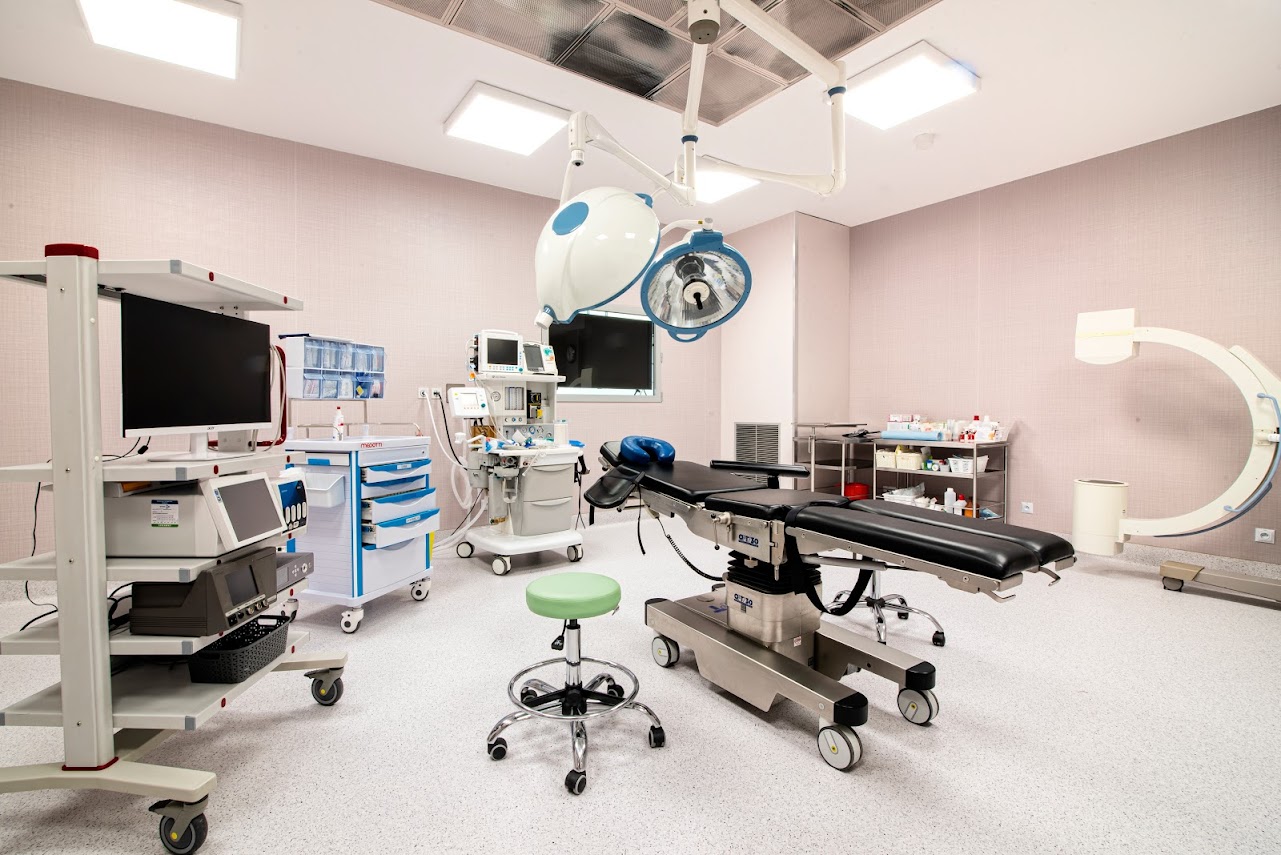
Interiors of the WILMED Hospital






Zadzwoń do nas
Price list
Cennik zabiegów
Ankle joint arthroscopy
Reconstruction of ankle joint ligaments
Zadzwoń do nas
FAQ
Is the procedure painful?
What does the recovery process look like?
When can one return to physical activity or sports?
Are there scars after the procedure?
Does arthroscopy provide a lasting effect?
Is every patient eligible for arthroscopy?
Ankle Arthroscopy – Where to Have the Procedure in Warsaw?
Ankle Arthroscopy in Warsaw – Where Is It Offered?
Ankle Arthroscopy in Warsaw – Where to Ultimately Go?
Ankle Arthroscopy at WILMED Hospital in One Day
Kontakt
Zadzwoń do nas
Skontaktuj się z nami
Adres
ul. Wiktorii Wiedeńskiej 9a lok.U2
02-954 Warszawa - Wilanów
Inspektor danych osobowych
Katarzyna Mączyńska - MBRK
[email protected]
Godziny otwarcia
Od poniedziałku do piątku
w godzinach od 08:00 do 20:00