


Strona główna / Knowledge Base /
Earlobe correction after piercings and ear gauges.
Earlobe Correction After Piercings and Ear Gauges – When Is It Worth Considering the Procedure?
Earlobes are a small facial feature, yet their appearance can have a significant impact on overall aesthetics. Heavy earrings, accidental pulling on jewellery, wearing earrings for many years, or previous use of ear gauges can cause the piercing hole to stretch, deform, or even result in a completely torn earlobe. Such changes cannot always be concealed with a hairstyle or jewellery.
In such cases, surgical earlobe correction may be an effective solution. The procedure can restore the natural shape of the earlobe, reduce an excessively stretched opening, or close a defect caused by an earring or ear gauge.
The extent of the correction should always be tailored individually to the type of deformity, the quality of the tissue, and the result the patient wishes to achieve.
Why Can an Earlobe Become Stretched?
The earlobe is composed primarily of skin and soft tissue. Unlike most of the external ear, it does not contain cartilage. This makes it flexible, but also susceptible to gradual stretching.
One of the more common causes of earlobe deformity is wearing heavy earrings for many years. An initially small piercing hole may gradually become longer over time and develop a characteristic vertical shape.
Damage can also occur suddenly. An earring catching on clothing, a towel, or another object can cause the earlobe to tear partially or completely.
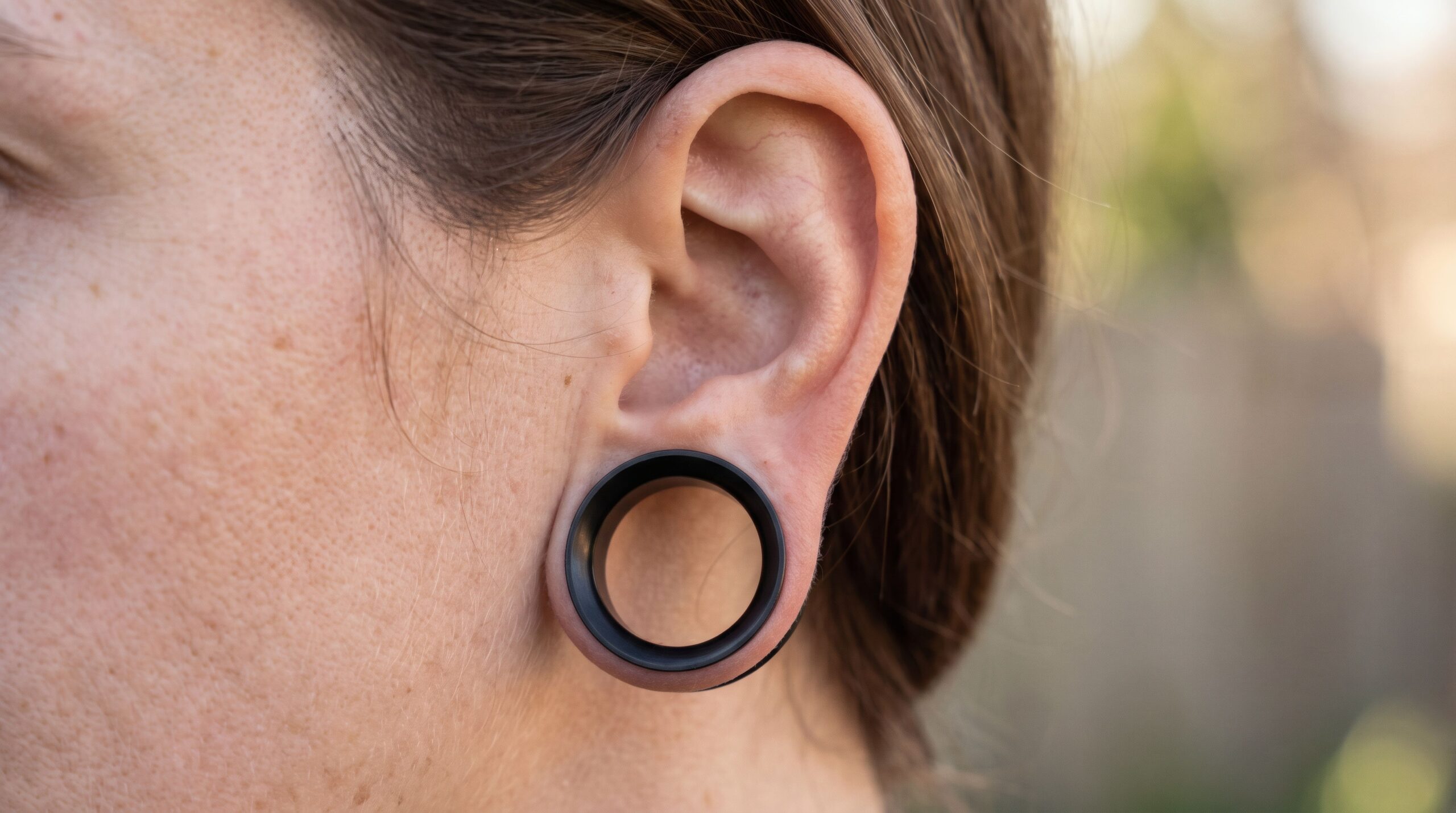
The problem may also result from wearing ear gauges. Deliberately and gradually enlarging the piercing causes significant stretching of the tissue. After the gauge is removed, the earlobe may shrink to some extent; however, with larger gauges, it often does not return to its previous appearance.
Torn Earlobe After an Earring
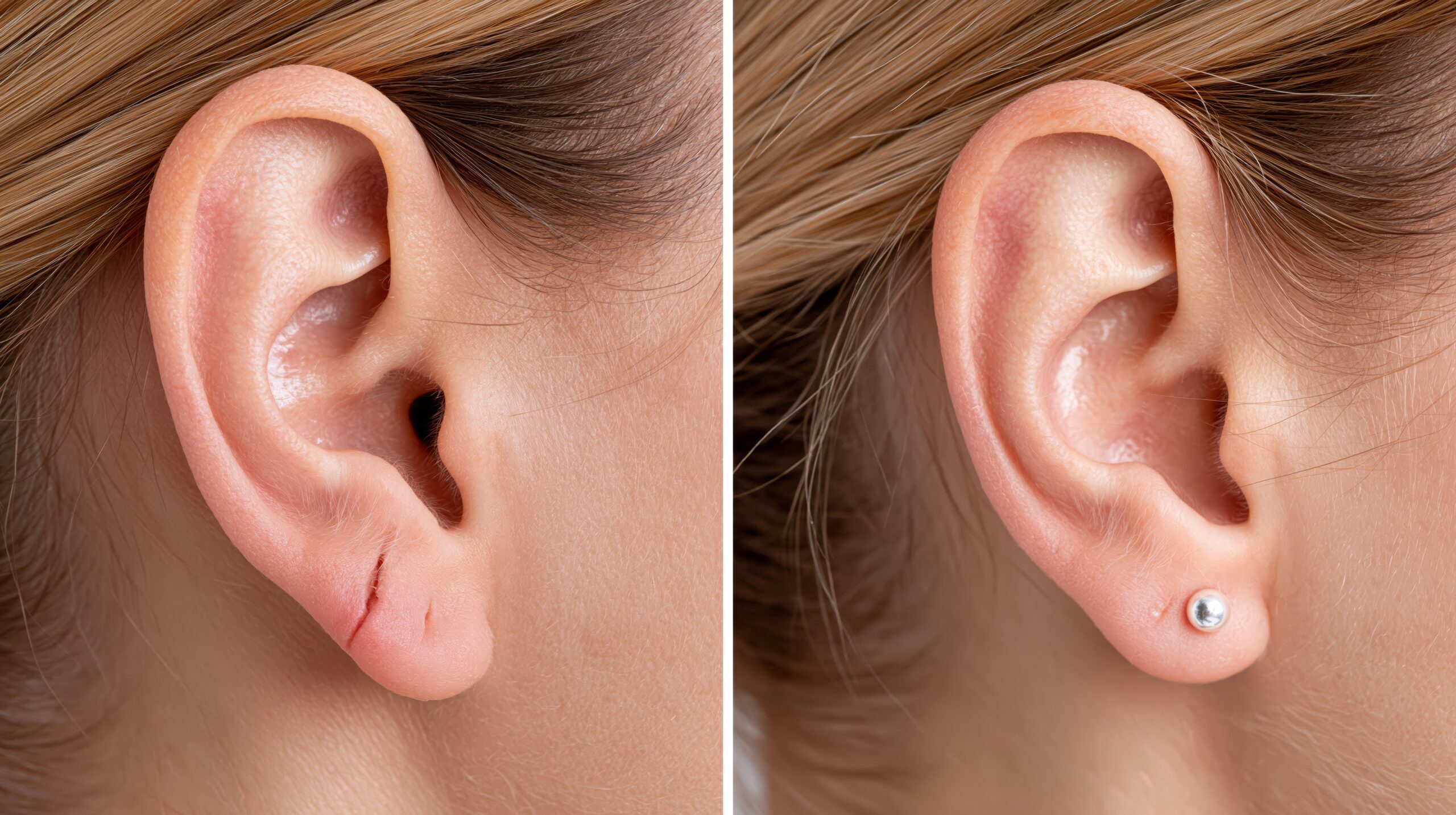
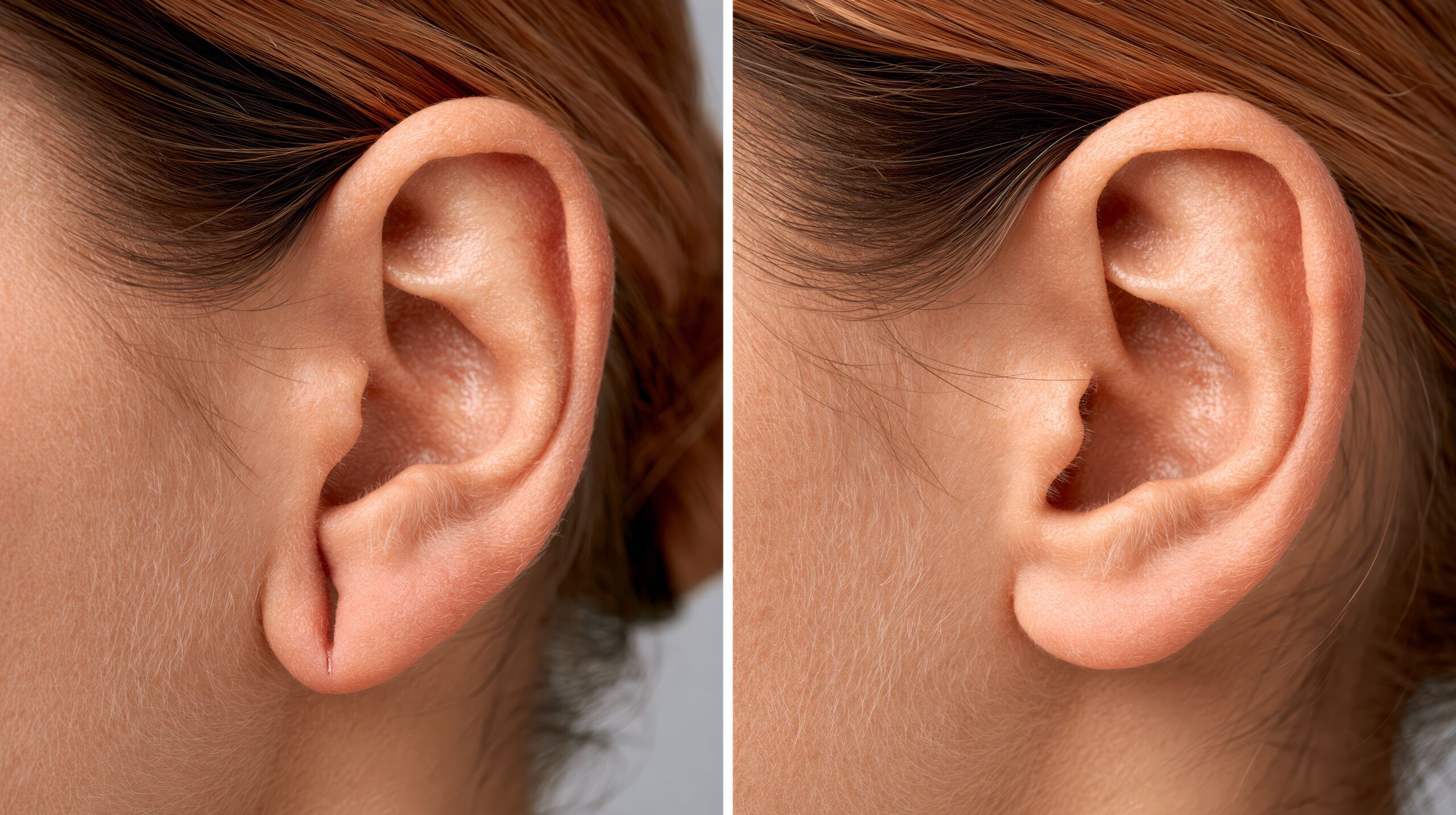
An earlobe tear can vary in severity. In some people, the only visible sign is an elongated piercing hole. In other cases, only a very thin strip of skin remains between the piercing hole and the lower edge of the earlobe.
If the tissue is subjected to further strain or the earring is pulled suddenly, the earlobe may split completely.
Once such an injury has healed, two separate edges covered with skin remain. The body is not always able to restore the original shape of the earlobe on its own. In such cases, surgical correction allows the tissues to be appropriately prepared and the natural contour of the earlobe to be restored.
Stretched Earring Holes
A complete earlobe tear does not always occur. Much more commonly, patients notice that their piercing holes gradually become larger.
The earring begins to sit lower on the earlobe, the hole becomes elongated, and heavier jewellery can make the deformity even more noticeable.
This change may primarily be an aesthetic concern, but continued strain on significantly stretched tissue also increases the risk of a complete tear.
Earlobe correction after earrings may involve removing the altered tissue, carefully preparing the edges of the opening, and precisely suturing them together. The exact technique, however, depends on the size of the defect and the anatomy of the earlobe.
Earlobe Correction After Ear Gauges
Earlobes stretched by ear gauges present a somewhat different problem.
With smaller openings, the tissue may partially contract after the jewellery is removed. However, the greater the degree of stretching and the longer the gauges have been worn, the less likely the earlobe is to return to its original appearance.
A large opening, an elongated earlobe, or a loose ring of skin may remain. In such cases, earlobe correction after ear gauges requires surgical reshaping of the existing tissue.
The aim of the procedure is not simply to close the opening. The surgeon must also seek to achieve the most natural earlobe contour possible, with appropriate size and proportions in relation to the other ear.
For this reason, earlobe correction after ear gauges may be more complex than closing a small earring hole.
What Does Surgical Earlobe Correction Involve?
The course of the procedure depends primarily on the type of damage.
A slightly elongated earring hole requires a different approach from a completely torn earlobe, while extensive stretching caused by ear gauges requires yet another technique.
In most cases, the edges of the deformity need to be appropriately prepared. The surgeon then reshapes the tissues to restore the contour of the earlobe and precisely sutures them together.
In cases of more extensive deformity, the aim is not only to close the opening but also to maintain appropriate proportions of the ear.
Earlobe procedures can be performed under local anaesthesia. The final technique and extent of the procedure are determined during a consultation with the surgeon.
Can Only One Ear Be Corrected?
Yes. The damage does not have to affect both ears.
A common situation is the accidental tearing of an earring from just one ear. The degree of stretching caused by jewellery may also differ between the two sides.
During the consultation, the surgeon assesses both ears, as proportions and the most natural symmetry possible are important even when only one earlobe is being treated.
This does not mean, however, that both earlobes always need to be operated on.
Will There Be a Scar After Earlobe Correction?
Any surgical procedure involving an incision in the skin will result in a scar. During earlobe correction, however, the surgeon aims to make the scar as discreet as possible and position it in the most favourable location.
The appearance of a mature scar depends on many factors, including the extent of the procedure, the individual tendency to develop scars, postoperative care of the treated area, and the healing process.
Immediately after the procedure, the incision line may be more visible than it will be later. The appearance of the scar usually changes over time. The final result should therefore only be assessed once the healing process is complete.
What Is Recovery Like After Earlobe Correction?
After the procedure, patients should follow their doctor’s instructions regarding wound care and postoperative follow-up appointments.
During the initial recovery period, mild swelling, tenderness, or redness may occur in the treated area. The ear should be protected from injury, accidental pulling, and excessive pressure.
Particular care should be taken when putting on clothes over the head, brushing or styling the hair, and using headphones or other items that could catch on the treated area.
Healing time varies from person to person, so the appropriate time to return to specific activities and any further recommendations should be discussed with the treating physician.
Can You Have Your Ear Pierced Again After Earlobe Reconstruction?
For many patients, this is one of the most important questions.
Having undergone earlobe correction does not necessarily mean giving up earrings permanently. However, a new piercing should not be performed too soon.
The tissues need sufficient time to heal properly and for the scar to remodel. The location of the new piercing should also be carefully selected – placing it directly through the previous scar may not always be advisable.
The best time to have the ear pierced again should be discussed during a follow-up appointment with the doctor who performed the correction.
When Is It Worth Considering Earlobe Correction?
A consultation with a surgeon may be worth considering if:
- the piercing hole has become noticeably elongated,
- the earring hole is located very close to the lower edge of the earlobe,
- the earlobe has been partially torn,
- the earlobe has been completely torn,
- a large opening remains after removing ear gauges,
- the earlobe is significantly elongated or deformed after wearing ear gauges,
- there is noticeable asymmetry between the earlobes,
- the appearance of the ears causes aesthetic discomfort.
The indications for the procedure and the available correction options should always be assessed individually.
Why Is a Consultation Before the Procedure Important?
The term “earlobe correction” covers a wide range of different concerns. A small earring hole and an extensive deformity caused by a large ear gauge require different approaches.
During the consultation, the doctor assesses factors such as the amount of available tissue, skin quality, ear symmetry, existing scars, and the patient’s expectations.
Based on this assessment, the extent of the procedure can be planned and the realistic possibilities of achieving the desired result can be discussed.
It is also important to inform the doctor about any chronic medical conditions, medications being taken, previous procedures, and any history of problems with wound healing or abnormal scarring.

Earlobe Correction at Wilmed in Warsaw
Wilmed Medical Centre offers surgical ear correction procedures, including the reconstruction of deformed and damaged earlobes.
Treatment may be suitable for people with an earlobe torn as a result of an earring being pulled out, as well as for patients with stretched piercing holes caused by wearing jewellery or ear gauges for many years.
Individual assessment is essential. The surgeon can evaluate the type and extent of the deformity and select an appropriate correction technique aimed at restoring the earlobe to the most natural shape possible.
If the concern involves not only the earlobe but also the position, size, or shape of the entire external ear, a broader range of ear correction options can also be discussed during the consultation.
The Natural Shape of the Earlobe Can Be Restored
A torn earlobe caused by an earring, a significantly enlarged piercing hole, or a deformity remaining after ear gauges does not necessarily have to be permanent.
Surgical correction allows the tissues to be appropriately prepared and reshaped to restore a more natural contour of the earlobe. The extent of the procedure depends on the type and severity of the deformity, so the first step should be a consultation with a plastic surgery specialist.
At Wilmed in Warsaw, patients can undergo assessment for ear and earlobe correction procedures, including the treatment of changes caused by earrings, piercings, and ear gauges.

FAQ – Frequently Asked Questions About Earlobe Correction
Can a torn earlobe heal on its own?
A fresh injury should be assessed by a doctor. In the case of a long-standing, healed tear, the edges of the defect are covered with skin, and spontaneous restoration of the earlobe’s normal shape may not be possible. In such cases, surgical correction may be an appropriate solution.
Can an earlobe that has been completely torn by an earring be repaired?
Such deformities can be treated with surgical reconstruction. The technique used depends on the type of tear, the amount of remaining tissue, and the shape of the earlobe.
Can a large hole left by an ear gauge be closed?
In many cases, this is possible. With large gauge holes, however, simply closing the opening may not be sufficient, and appropriate reshaping of the stretched tissue may also be necessary.
Is earlobe correction performed under local anaesthesia?
Earlobe procedures can be performed under local anaesthesia. The doctor determines the appropriate type of anaesthesia and the extent of the procedure after assessing the individual case.
Is earlobe correction only for earlobes stretched by gauges?
No. The procedure may also be performed for stretched holes caused by traditional earrings, partial or complete earlobe tears, asymmetry, and other deformities.
Will I be able to wear earrings again after the procedure?
Once the ear has fully healed, it may be possible to have it pierced again. However, the appropriate timing and location of the new piercing should be discussed with your doctor.
Can both earlobes be corrected at the same time?
If both ears are affected, correction of both earlobes can be planned during the same consultation. The extent of the procedure is determined individually.
Will there be a visible scar after the procedure?
Every surgical procedure leaves a scar. However, careful planning of the incision and precise suturing of the tissues are intended to make the scar as discreet as possible. Its final appearance also depends on the individual healing process.
Are earlobe correction and prominent ear correction the same procedure?
No. Earlobe correction primarily involves the soft lower part of the ear. Prominent ear correction, on the other hand, mainly involves reshaping and repositioning the external ear. In some cases, the two procedures may be combined.
What type of doctor should I see for a torn or stretched earlobe?
If you are considering aesthetic reconstruction, it is advisable to consult a plastic surgery specialist. The doctor will assess the type of deformity, determine the possibilities for reconstructing the earlobe, and recommend an appropriate treatment method.
Wyróżnienie dla Najlepszej Placówki 2019
Wyróżnienie przyznane przez pacjentów, którzy skorzystali z naszych usług za pośrednictwem platformy tourmedica.pl
Kontakt
Skontaktuj się z nami
Zadzwoń do nas
Adres
ul. Wiktorii Wiedeńskiej 9a lok.U2
02-954 Warszawa - Wilanów
Inspektor danych osobowych
Katarzyna Mączyńska - MBRK
[email protected]
Godziny otwarcia
Od poniedziałku do piątku
w godzinach od 08:00 do 20:00