


Strona główna / Knowledge Base /
Knee joint arthroscopy
Hope for effective knee treatment
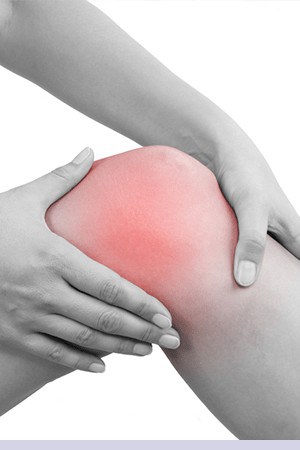
Knee joint injuries occur very frequently, for example as a result of sports such as skiing, which expose our knees to various types of trauma. Ligaments, menisci, and articular cartilage usually absorb the entire impact of the injury. The unfortunate person experiencing this will most often complain of severe knee pain, joint swelling due to a hematoma, and sometimes even \”locking\” of joint mobility. Any attempt to stand on the injured leg may cause pain (of varying intensity). Many such injuries do not leave permanent consequences; however, there is one condition – they must be treated. Unfortunately, patients most often see a doctor only when they can no longer walk and home remedies no longer help.
Surgical treatment – but which one?
Many injuries or their consequences require surgical treatment.
An increasing number of knee joint surgeries are now performed using arthroscopy – a modern, minimally invasive method that allows diagnosis and treatment of many knee and other joint conditions requiring surgical intervention. This method is applicable for treating acute injuries as well as chronic joint diseases.
The essence of this method is that a microcamera is inserted into the joint, and using special surgical instruments, even very complex operations can be performed without opening the joint. The course of the surgery is observed on a television monitor, often with significant magnification. An experienced orthopedist can repair damaged parts of the joint, including cartilage, ligaments, and bone.
This technique is used for reconstructing damaged ligaments, suturing or removing meniscal fragments, and cartilage grafts.
In chronic diseases, overgrown synovial membrane, loose joint fragments often causing significant pain (so-called \”joint mice\”), or bony outgrowths (so-called osteophytes) are removed.
Invaluable benefits of this type of treatment:
- avoiding extensive joint opening allows, among other things, a very quick return home without the need for unpleasant and burdensome hospitalization and immobilization of the limb in a cast.
Depending on the extent of the procedure, the patient may return home even on the day of surgery and return to work after a few days. Further treatment is conducted on an outpatient basis.
Patients undergoing this type of surgery recover full activity much faster than after traditional methods, which is especially important for professionally active individuals.
Not insignificant, not only for women, is the final cosmetic effect. Only small, barely noticeable puncture marks remain on the skin, rather than a large disfiguring scar as with traditional surgeries.
Wyróżnienie dla Najlepszej Placówki 2019
Wyróżnienie przyznane przez pacjentów, którzy skorzystali z naszych usług za pośrednictwem platformy tourmedica.pl
Kontakt
Skontaktuj się z nami
Zadzwoń do nas
Adres
ul. Wiktorii Wiedeńskiej 9a lok.U2
02-954 Warszawa - Wilanów
Inspektor danych osobowych
Katarzyna Mączyńska - MBRK
[email protected]
Godziny otwarcia
Od poniedziałku do piątku
w godzinach od 08:00 do 20:00