


Strona główna / Knowledge Base /
What is an inguinal hernia and how can it be treated?
Inguinal hernia is the most common type of hernia, occurring much more frequently in men than in women. It develops when internal organs of the abdominal cavity move through an opening located in the groin area. At the Wilmed clinic, we treat inguinal hernias using modern, minimally invasive tension free procedures, which provide patients with a significantly shorter recovery time.
A hernia is a condition in which an internal organ moves outside its natural, proper position through an opening called the hernia gate. There are several types of hernias, among which the most common is the abdominal hernia. This, in turn, is divided by location into inguinal, femoral, and umbilical hernias. According to some reports, inguinal hernias may occur in up to 25% of the population, with men being affected significantly more often than women.
What is an inguinal hernia?
An inguinal hernia occurs when internal organs of the abdominal cavity move through an opening located in the groin area. As mentioned earlier, this opening is called the hernia gate – through it, a portion of the peritoneum protrudes outside the abdominal cavity in the form of a sac. Inside it, fragments of various tissues and internal organs may be found.
Causes and symptoms of inguinal hernia
There are many risk factors for developing an inguinal hernia. It may result from obesity and the associated weakening of connective tissue, may appear in people performing very heavy physical work, and in men it can be a consequence of urinary problems due to prostate enlargement.
The first symptoms of an inguinal hernia include aching in the groin area, especially after physical exertion, after bowel movements, or following a sudden coughing fit. A bulge may be visible in the groin, which retracts spontaneously or after gentle pressure.
How can an inguinal hernia be treated?
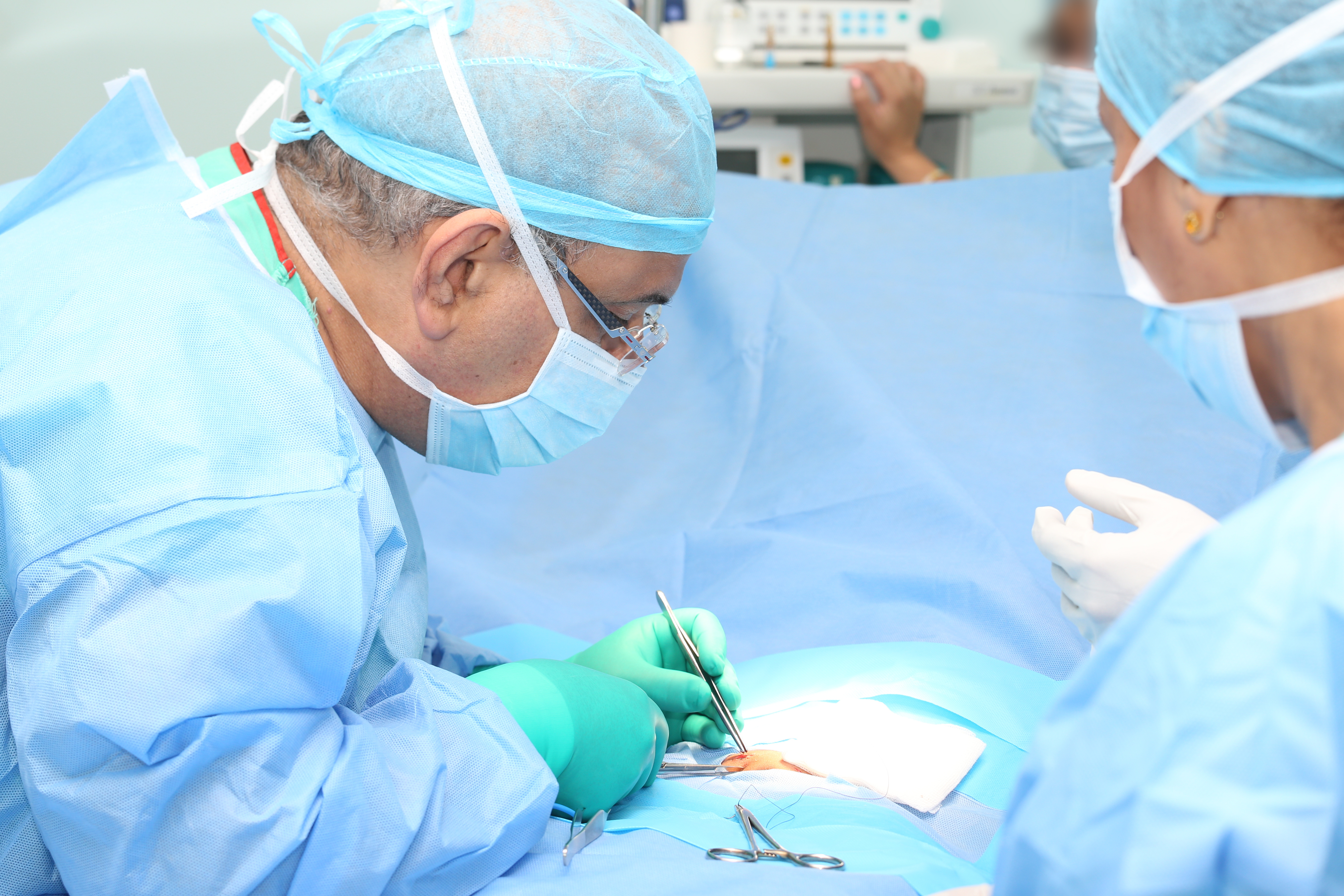
Once diagnosed, prompt treatment of the hernia is crucial – otherwise, serious health and life-threatening complications may arise. At the Wilmed clinic, we treat inguinal hernias using a polypropylene mesh that covers the hernia gate and gradually integrates with the tissues, creating a barrier against recurrence. Our specialists perform the operation using the modern tension free method – it is less invasive for patients and causes less pain. The patient returns home the same day and can resume work and normal activities after about 7 days. Thanks to the use of less burdensome anesthesia (local anesthesia combined with sedation), inguinal hernia surgery can be performed even in elderly and chronically ill patients.
To ensure the safety of our patients during the coronavirus pandemic, Wilmed clinic has implemented strict safety protocols, allowing us to perform inguinal hernia surgeries and other procedures. We encourage you to contact us -> https://en.wilmed.pl/kontakt/.
Wyróżnienie dla Najlepszej Placówki 2019
Wyróżnienie przyznane przez pacjentów, którzy skorzystali z naszych usług za pośrednictwem platformy tourmedica.pl
Kontakt
Skontaktuj się z nami
Zadzwoń do nas
Adres
ul. Wiktorii Wiedeńskiej 9a lok.U2
02-954 Warszawa - Wilanów
Inspektor danych osobowych
Katarzyna Mączyńska - MBRK
[email protected]
Godziny otwarcia
Od poniedziałku do piątku
w godzinach od 08:00 do 20:00