


Strona główna / Knowledge Base /
Laparoscopic gallbladder surgery
Gallbladder – when should it be removed?
The gallbladder is a part of the bile ducts. Most of us know someone who has been diagnosed with what is commonly called gallstones, and most often these are women, although men are also diagnosed with them. The disease increasingly affects young people and even children. Statistically, women suffer more frequently from gallbladder stones and undergo surgery to remove it.
This article will provide an overview of this quite common condition. It is estimated that 1 in 5 Poles suffer from gallstone disease, including asymptomatic cases.
How do the bile ducts work?
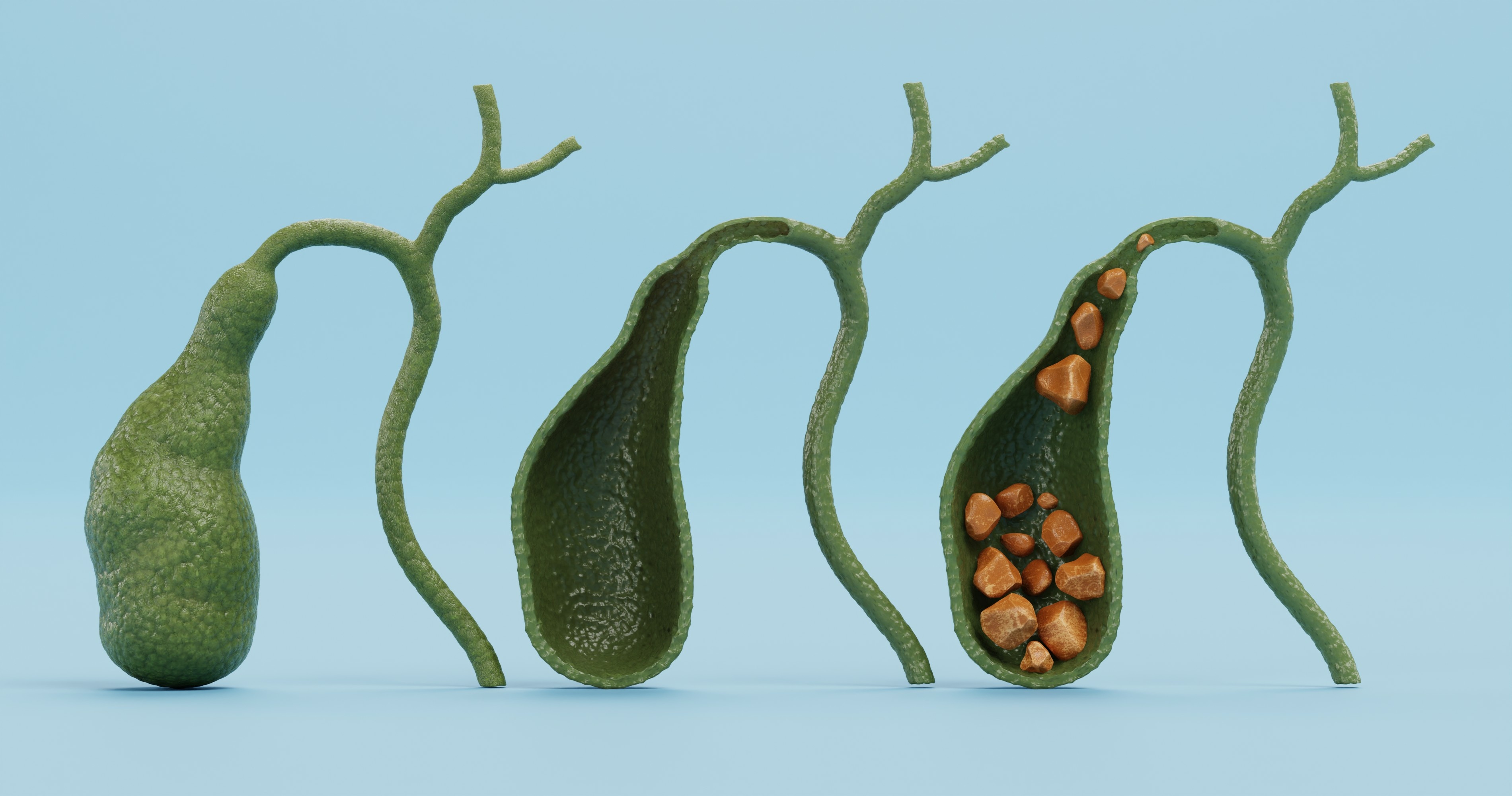
Bile is produced in the liver and then transported through ducts to the digestive tract. The liver is lined with small ducts that join together into larger ducts, forming two main ducts leaving the liver: the right and left hepatic ducts. At the liver hilum, these two ducts merge to form the main bile duct, which carries all the bile produced by the liver. Along the way, the cystic duct joins the main bile duct, connecting it to the gallbladder.
The gallbladder is an organ about 10 cm in size that stores bile produced by the liver and releases it during meals. Bile is a substance containing bile acids, bile pigments, and other components whose main function is the emulsification of fats. This process involves \”breaking down\” large fat molecules from food. This creates micelles, which are small fat particles surrounded by bile acids. The purpose of emulsification is to facilitate fat digestion by enzymes and absorption in the intestine.
The most common disease affecting the bile ducts and gallbladder is gallstone disease. Less common conditions include gallbladder polyps, inflammation, bile duct cysts, and malignant tumors of the bile ducts.
Factors contributing to the development of gallbladder stones
These factors primarily include obesity, high cholesterol levels, rapid weight loss due to dieting, age over 40, excessive fat intake especially combined with simple carbohydrates, diabetes, liver diseases, unhealthy lifestyle, smoking, alcohol consumption, and poor diet.
What is gallstone disease?
The most common indication for gallbladder removal surgery is gallstone disease. This condition is caused by the formation of stones (deposits, concretions) in the gallbladder, formed from substances in bile that have not been eliminated. The deposits most often consist of bile pigments, cholesterol, calcium ions, and proteins. Stones are classified as cholesterol stones (usually large and fewer in number) or more commonly calcified stones (smaller and numerous in the gallbladder).
Gallstone disease can be asymptomatic, but when symptoms appear, they are unmistakable. A typical symptom is severe pain (known as biliary colic) located in the right upper quadrant or the middle upper abdomen, which may radiate to the right shoulder blade. Pain usually occurs after eating a fatty meal. During a gallbladder attack, bloating, nausea, and vomiting may also occur.
Indications for surgery
- The most common indication for gallbladder removal surgery is gallstone disease.
Gallbladder removal surgery is called cholecystectomy. It can be performed via open (classic) surgery or minimally invasive techniques such as laparoscopy, which is currently the gold standard. Laparoscopy involves less surgical intervention, greater safety, lower risk of complications and infections, and shorter hospitalization and recovery periods.
It is important to remember that not every case of gallstone disease requires surgery. If there is no pain or functional impairment, surgery is not necessary. However, the gallbladder should be monitored regularly with abdominal ultrasound examinations.
Surgery is indicated and sometimes necessary when the disease causes pain, poses a risk of acute pancreatitis, or coexists with gallbladder polyps. During surgery, the entire gallbladder is removed while preserving the bile duct that carries bile from the liver to the duodenum.
- Acute cholecystitis – another indication for gallbladder removal surgery
This condition results from untreated gallstone disease and occurs in about 10-20% of patients with this disease. Inflammation develops due to obstruction of the cystic duct by a stone or swelling of the mucous membrane. Bile that cannot flow freely from the gallbladder and stones irritating the mucosa cause symptoms such as vomiting, severe and persistent pain under the right rib cage, and fever.
Treatment varies and may involve urgent surgery or, if not possible, managing the inflammation first and removing the gallbladder during a planned procedure several weeks later.
- Gallbladder cancer
Gallbladder cancer is relatively rare and occurs more often in women over 60 years old. Risk factors include untreated gallstone disease, bile duct cysts, gallbladder polyps larger than 1 cm, and characteristic gallbladder wall calcifications.
Treatment involves surgical removal of the gallbladder with a margin of surrounding tissue, usually performed via open surgery.
Preoperative diagnostics for gallbladder surgery
Gallstone disease is diagnosed by abdominal ultrasound, which reveals deposits and allows assessment of gallbladder size and bile duct width. If surgery is indicated, blood tests, chest X-ray, ECG, and other specific tests prescribed by the referring physician are required.
At Wilmed Clinic, we provide comprehensive care for gallbladder conditions. We examine the gallbladder using ultrasound and perform laparoscopic gallbladder removal surgery. Our team consists of experienced surgeons trained in renowned clinical centers.
If you experience pain, bloating, or a feeling of fullness after heavy meals, have an abdominal ultrasound and consult a physician.
Wyróżnienie dla Najlepszej Placówki 2019
Wyróżnienie przyznane przez pacjentów, którzy skorzystali z naszych usług za pośrednictwem platformy tourmedica.pl
Kontakt
Skontaktuj się z nami
Zadzwoń do nas
Adres
ul. Wiktorii Wiedeńskiej 9a lok.U2
02-954 Warszawa - Wilanów
Inspektor danych osobowych
Katarzyna Mączyńska - MBRK
[email protected]
Godziny otwarcia
Od poniedziałku do piątku
w godzinach od 08:00 do 20:00