


Strona główna / Knowledge Base /
Gallbladder and diet
Gallbladder and diet
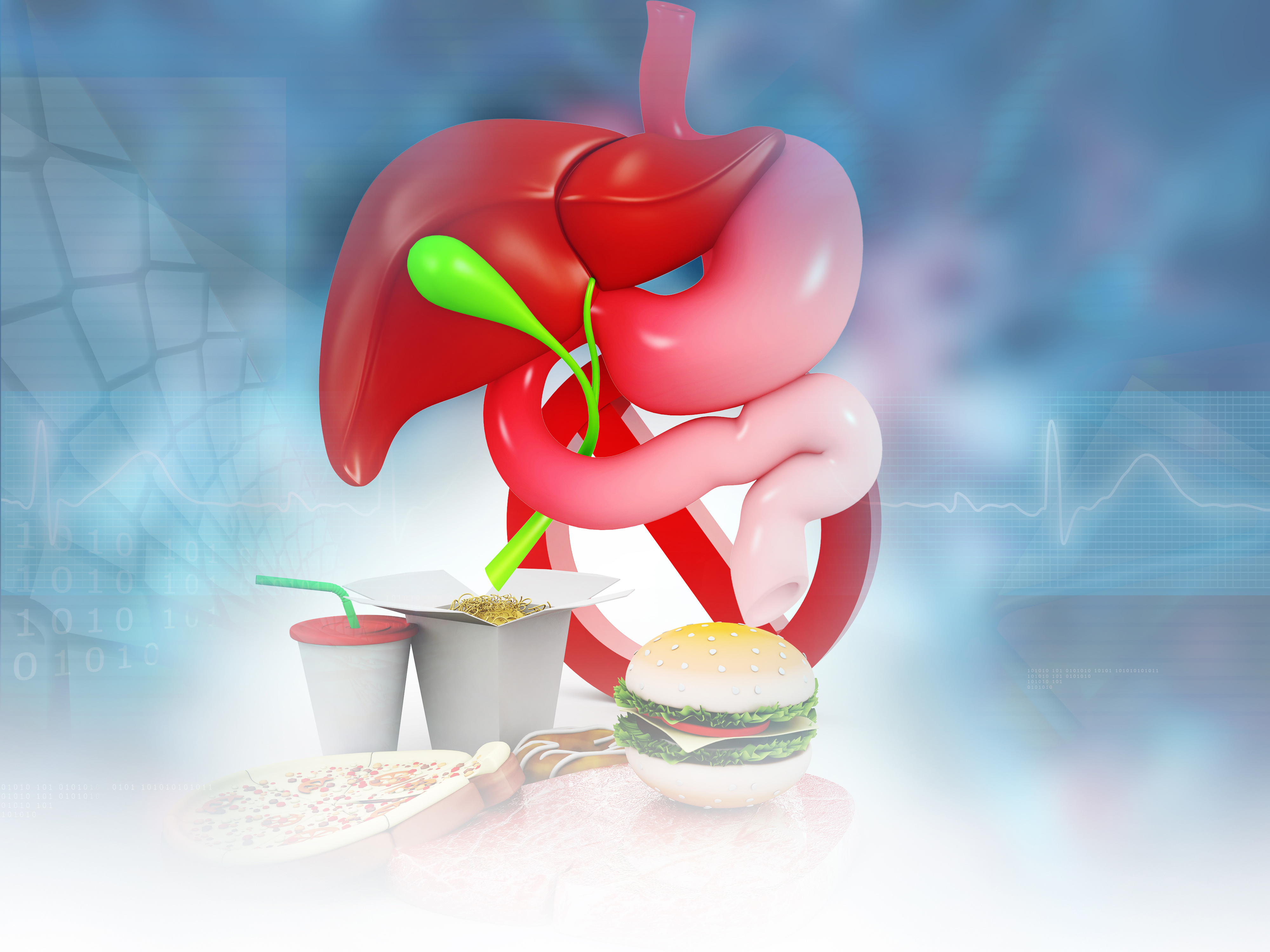
The gallbladder is a rather sensitive part of our body, particularly vulnerable to diseases due to our modern dietary choices. Our Western diet, often focused on consuming large amounts of carbohydrates (quite often simple sugars) and fats (often unhealthy ones), poses a significant challenge for the digestive system, liver, and gallbladder. Unhealthy eating habits expose the gallbladder to a fairly common ailment – gallstones.
As we know, the gallbladder is a tiny organ, about 10 cm, that has to cope with quite extreme conditions of an unhealthy diet. It often fails in this battle, forming deposits (gallstones) that disrupt its function. And although small, it does important work. It helps digest fats!
First, it stores bile, then, when we eat a meal, it releases it. Bile is a substance containing bile acids, bile pigments, and other components whose main function is the emulsification of fats. Large fat molecules from food are broken down into small ones called micelles surrounded by bile acids. The purpose of emulsification is to facilitate fat digestion by enzymes and absorption in the intestine.
Unfortunately, after years of succumbing to the conditioning of advertisements for treats, snacks, and the sweet promises of quickly satisfying hunger and the pleasure of grocery shopping, we realize that we are obese, have high cholesterol, high blood sugar, and many other ailments that force us to take care of ourselves.
The gallbladder gets hit by ricochet! Seemingly by accident… Yet… An abdominal ultrasound reveals it is filled with stones, cholesterol deposits, or calcified ones. Sometimes it hurts. We ask ourselves: how come, without warning? Without advertisement…?
Gallstones develop due to bile stasis in the bile ducts. The cause is an improper composition of bile. Bile consists of three main components: cholesterol, bile acids, and lecithin. With a proper ratio of these components, cholesterol dissolves in bile, and bile passes through the bile ducts into the duodenum. If the bile composition is abnormal, cholesterol crystals combine with calcium salts. Consequently, deposits form in the gallbladder or bile ducts.
From a medical perspective: stones are divided into cholesterol stones (usually large and fewer in number) or more commonly calcified stones (smaller and present in large quantities in the gallbladder).
I have gallstones, what next?
- If it doesn\’t hurt, that\’s good, you can continue living, but the conclusion is: you should change your eating habits to avoid exacerbations.
- If it hurts, therapy is necessary, usually surgery, then continue living and also change your eating habits!
In both cases, reflection on nutrition, personal dietary choices, daily habits, and lifestyle is unavoidable.
Painless gallstones can be treated as a warning signal, painful ones as an alarm and indication for surgery. There is no doubt that action is needed!
Seeking help from a dietitian
As observations show, most lifestyle diseases are diet-dependent. What we eat influences disease development but can also stop it, reduce the risk of occurrence, and minimize unpleasant symptoms. The same applies to gallbladder disease.
Nutrition is important in gallbladder disease.
Dietary recommendations
If you have been diagnosed with gallstones but do not experience any symptoms, a rational diet is recommended. You should eliminate all fast foods, limit heavy, fried dishes containing large amounts of fat and sugar. The diet should include dietary fiber, as it increases intestinal transit. Additionally, the liver increases production of chenodeoxycholic acid (one of the bile acids), which promotes dissolving cholesterol deposits. Good sources of dietary fiber are vegetables and fruits sprinkled with bran or chia seeds or psyllium husk. Eat regularly, five small meals a day, at fixed times, and drink recommended amounts of water.
It is worth including olive oil and cold-pressed vegetable oils in the diet. Note that frying with some of these oils is not healthy. Include marine fish such as salmon, sardines, and herring. Exclude hard-to-digest products, those that linger long in the stomach, cause bloating, spicy meals, and large amounts of alcohol.
Diet and surgery
If you have been diagnosed with gallstones and surgery is indicated, it is worth preparing for it and learning dietary recommendations for after gallbladder removal. After surgery, it is also important to implement lifestyle improvements toward a more balanced and health-supportive routine, ensuring adequate physical activity, sleep, and emotional balance.
Nutrition before surgery
Gallbladder surgery is usually planned. Proper preparation and knowledge of post-operative dietary recommendations are necessary.
How we eat during the perioperative period is one of the factors influencing the patient\’s recovery. Poor nutritional status before and after surgery can increase the risk of postoperative complications and prolong convalescence. The body is weakened after surgery and needs time to regenerate. Nutrition is essential because the food and its components participate in the body\’s regeneration process. Before surgery, a light diet rich in vitamins, macro- and microelements is recommended.
What should the diet look like after surgery?
Primarily, it should be low in fat and easy to digest. Meals should be small in volume but eaten more frequently, with the evening meal no later than 3 hours before bedtime, and proper hydration is necessary.
Diet rules after gallbladder removal:
- eliminate fried foods, replace them with boiling, baking, or stewing
- avoid bloating, spicy foods, and those delaying stomach emptying (fatty dishes, legumes, chocolate, sweets, coffee, spicy seasonings);
- limit sweets and cakes
- introduce small amounts of fats from vegetable oils, semi-fat or low-fat dairy, ground flaxseed, and avoid processed meats, cold cuts, sausages, bacon.
- eliminate alcohol, smoking, strong coffee, and tea.
After the recovery period, you can gradually return to a less restrictive diet, but always remembering the principles of a light and liver-friendly diet.
To establish optimal individual nutrition consistent with dietary recommendations after gallbladder removal, it is advisable to consult a dietitian who will help create a meal plan and implement new eating habits.
Wyróżnienie dla Najlepszej Placówki 2019
Wyróżnienie przyznane przez pacjentów, którzy skorzystali z naszych usług za pośrednictwem platformy tourmedica.pl
Kontakt
Skontaktuj się z nami
Zadzwoń do nas
Adres
ul. Wiktorii Wiedeńskiej 9a lok.U2
02-954 Warszawa - Wilanów
Inspektor danych osobowych
Katarzyna Mączyńska - MBRK
[email protected]
Godziny otwarcia
Od poniedziałku do piątku
w godzinach od 08:00 do 20:00