


Strona główna / Knowledge Base /
Uwaga na kleszcze!
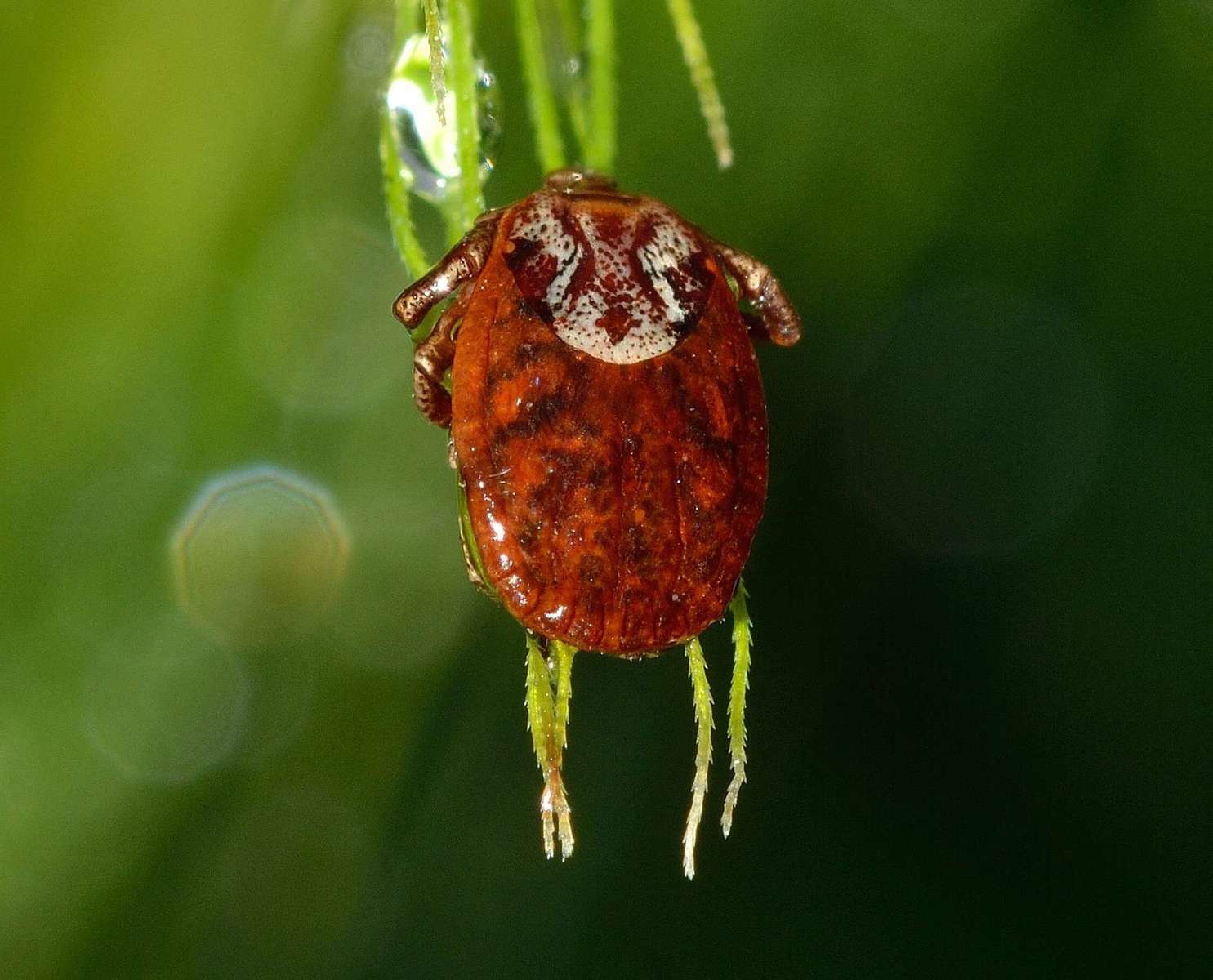
Spring and summer are times of increased activity of inconspicuous but very dangerous animals for the health of both animals and humans – ticks. These arachnids inhabit gardens, parks, forests, and meadows, attack unnoticed, and – worst of all – transmit many serious diseases, including difficult-to-treat Lyme disease. So how can you protect yourself from ticks and what should you do if you find that you have been bitten?
Ticks are insects from the arachnid class. Worldwide, there are over 850 species, of which about 20 can be found in Poland. The most common in our country are the common tick, meadow tick, and pigeon tick. They live in forests, gardens, parks, on the edges of lakes and wetlands, as well as near dovecotes and urban pigeon colonies.
Ticks feed on blood at every stage of their development – both human and animal. Interestingly, some tick species (e.g., pigeon ticks) can move into apartments and inhabit places such as window sills or other dark areas if their natural hosts, pigeons, are absent nearby. Many people believe that ticks are active only in spring and summer. Unfortunately, this is not entirely true. These arachnids can feed even in winter if it is mild and frost-free. Ticks can sense their prey from a distance of 20 meters. They respond to the smell of sweat, exhaled carbon dioxide, and body temperature. They most often attach to soft and thin skin, e.g., behind the ear, in the groin, or under the knees. The moment of the bite is imperceptible because the tick simultaneously secretes a special anesthetic substance that eliminates discomfort such as pain, itching, or redness. It can feed on the skin for up to 7 days and during this time can increase its size sixfold.
How to protect yourself from ticks?
To protect yourself from tick bites, it is worth following a few basic rules. First of all, after any outdoor activity – a walk in the park, gardening, or a picnic in the forest – you should carefully examine your body, especially in areas commonly attacked by ticks. When going into nature, it is advisable to wear light-colored clothing and a head covering. This makes it much easier to spot a tick and remove it from clothing. Insect repellent products available in pharmacies or drugstores, such as creams or aerosols, can also be helpful.
Why are ticks so dangerous?
According to estimates, about 20-25% of ticks are infected with the tick-borne encephalitis virus and Lyme disease spirochetes. After being bitten by an infected insect, these diseases can be transmitted to humans. Interestingly, the encephalitis virus can also be contracted by drinking milk directly from an infected cow. However, these microorganisms are destroyed during pasteurization.
The threat of tick-borne diseases must not be underestimated – in 2015, nearly 14,000 cases of Lyme disease were detected in Poland, while in 2001 only 2,000 cases were reported. This dynamic increase is partly due to the still insufficient public awareness of the dangers posed by ticks and partly due to climate changes that cause these insects to be active almost year-round. Lyme disease is a serious illness that can cause significant diagnostic difficulties. Its first symptom is often a skin rash, frequently overlooked by patients, as well as weakness, fever, or muscle pain, which can be mistaken for the flu. Untreated Lyme disease in advanced stages can cause a range of very serious systemic symptoms – joint, cardiac, or neurological.
In the event of a tick bite, it is advisable to promptly undergo tests to detect possible Lyme disease infection, which we offer at the Wilmed Medical Clinic. We invite you to register from Monday to Friday by phone at 22 651 98 61 or 692 407 540 or by email at [email protected].
Wyróżnienie dla Najlepszej Placówki 2019
Wyróżnienie przyznane przez pacjentów, którzy skorzystali z naszych usług za pośrednictwem platformy tourmedica.pl
Kontakt
Skontaktuj się z nami
Zadzwoń do nas
Adres
ul. Wiktorii Wiedeńskiej 9a lok.U2
02-954 Warszawa - Wilanów
Inspektor danych osobowych
Katarzyna Mączyńska - MBRK
[email protected]
Godziny otwarcia
Od poniedziałku do piątku
w godzinach od 08:00 do 20:00